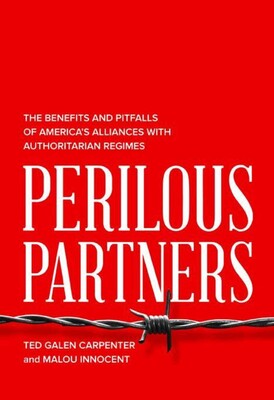
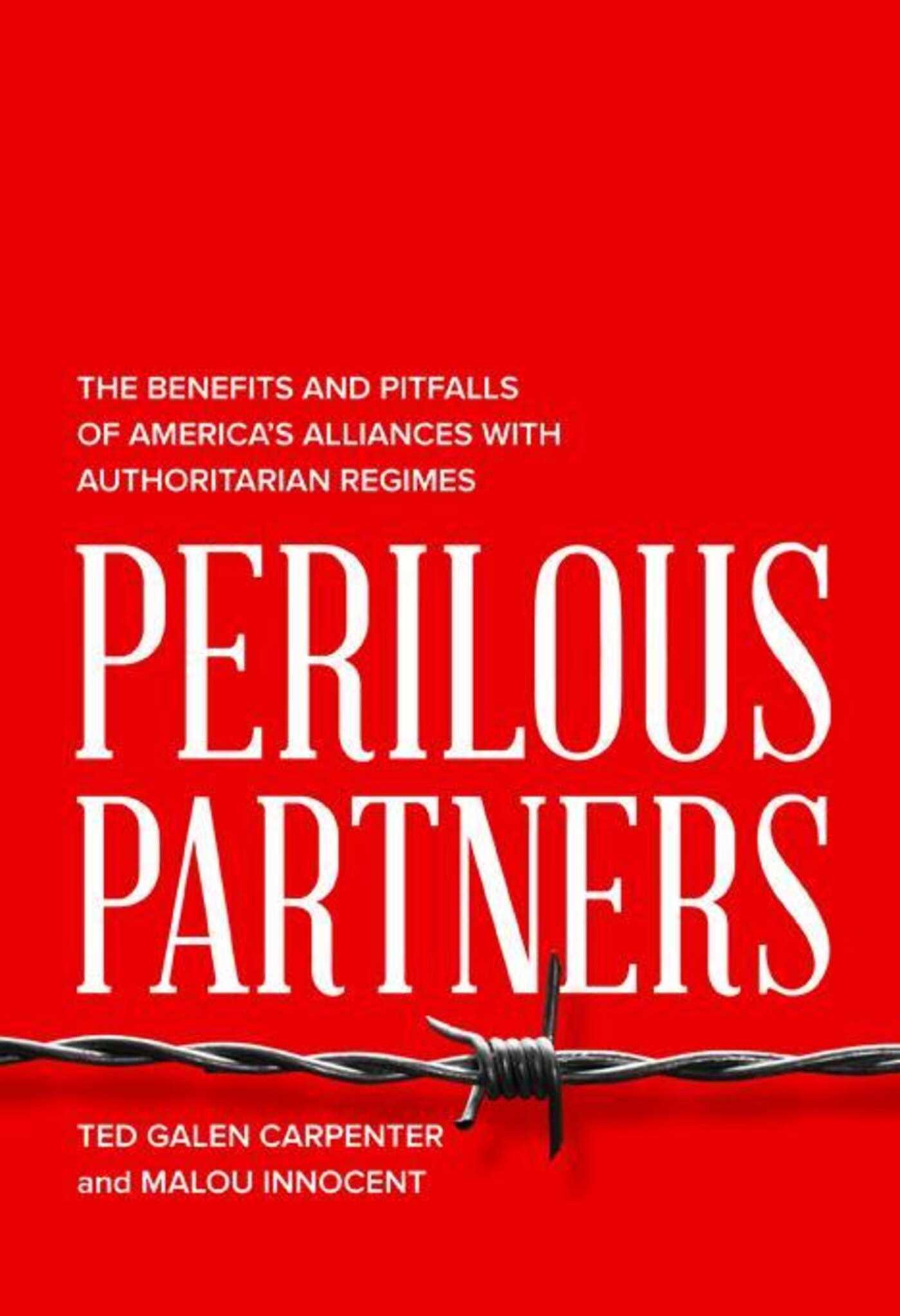
Thoroughly researched and persuasively argued, Perilous Partners provides a damning indictment of U.S. support for tyrannical regimes over the past 70 years. As Carpenter and Innocent conclusively show, such support rarely advanced U.S. policy goals but consistently undermined America's moral standing. Highly recommended for all serious students of American foreign policy.
– Michael Klare, author of Blood and Oil
Despite the reference to "benefits" in the subtitle, few are described in this derisive Cato Institute treatise on post-WWII American foreign policy. Senior Cato fellow Carpenter (The Fire Next Door) and adjunct scholar Innocent tear into successive presidential administrations for pursuing relationships with authoritarian regimes throughout the world. For a country claiming to be based on "peace, democracy, individual liberty, and the rule of law," as Ronald Reagan put it, the actions of the U.S.—publicly and covertly—did not stay true to its founding ideals. Even Jimmy Carter, famous for his focus on human rights over the realpolitik of Nixon and Kissinger, comes under fire for not doing enough to distance the U.S. from human rights abusers, notably the Shah of Iran. The president who receives the least criticism is Bill Clinton, largely because his presidency fell after the Cold War and before the War on Terror. In the authors' opinion, the reasons given for aligning with repressive regimes were rarely vital to national interests, rather serving to justify interventionalism around the world. This lengthy read may be hard to swallow for some, but it will also be eye-opening to those confused by inconsistencies and discrepancies in American foreign policy over the last 70 years. (Sept.)
– Publishers Weekly
The American penchant for moralizing when it comes to foreign policy has benefited the world little while earning for the United States a well-deserved reputation for hypocrisy. As Ted Galen Carpenter and Malou Innocent make clear in this very instructive book, morality does have a role in statecraft. But striking a balance between values and interests requires something more than glib posturing. Their concept of ethical pragmatism provides a way to find that balance.
– Andrew J. Bacevich, professor emeritus of international relations and history, Boston University, and president of Quincy Institute for Responsible Statecraft
While Americans are still liked in most of the world, our government is often hated. Perilous Partners shows how U.S. interests are better served when we are a beacon rather than a policeman, something we don't do well, especially in the Middle East. Instead, we just create new enemies. This book lays it all out clearly—from times past when America held the moral high ground, to now, when we have lost so much of it.
– Jon Basil Utley, Publisher, The American Conservative