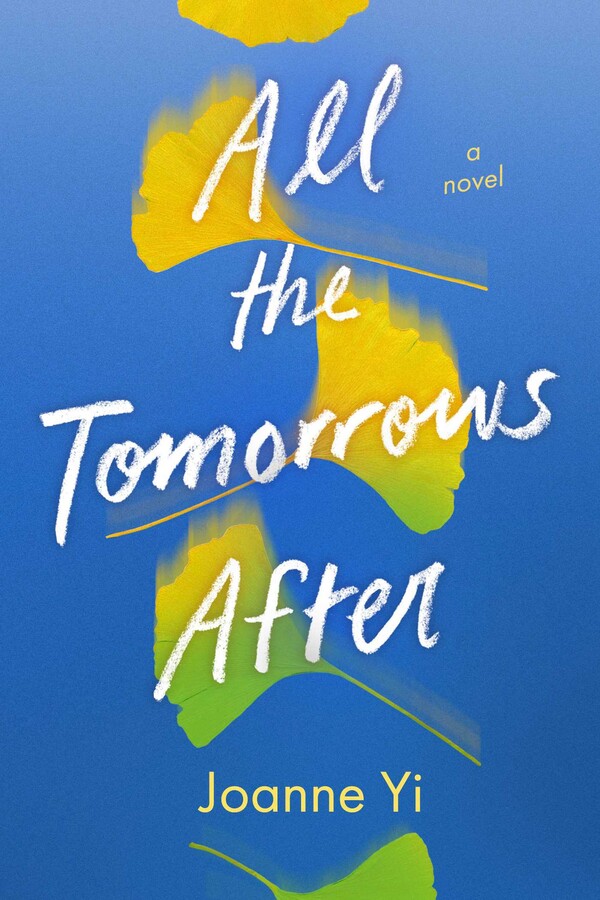
A “harrowing yet hopeful” (Amber Smith, New York Times bestselling author of The Way I Used to Be) novel about a Korean American teen navigating grief and first love who agrees to accept money from her estranged father in exchange for letting him get to know her.
Each night, Winter Moon counts her earnings dreaming of escape. Once she’s saved enough, she and her grandmother can finally take flight and disappear. But when her spiteful mother steals her money and blows through it all in one day, Winter is forced to turn to her estranged father, who recently reappeared in her life after being absent for more than a decade. They agree upon a simple contract: she spends time with him in exchange for payment.
It’s not easy reconciling the past and the present, though, and when she’s struck with a sudden loss, Winter flounders in grief and rage. The only person offering a hand is Joon, the new boy at school who sees Winter when no one else does.
When Winter discovers a secret her father has been keeping from her, things get even more complicated. As she navigates grief, first love, and forgiveness, Winter begins to forge connections, new and old, that make her question everything: her future, her conviction to disappear, and what it really means to be family. Winter knows that broken things can never be fixed, but can they come back together in a different way?
Reading Group Guide
Join our mailing list!
Simon ❤ Indies is full of valuable information for indie booksellers and buyers (both Children's and Adult), including:
1. Sung wants to spend time with Winter, the daughter he abandoned as a child, but Winter only agrees to meet him if she is paid for that time. What are the outcomes, both good and bad, that could result from this arrangement? What would you have done in Winter’s position?
2. Describe Halmoni. What is her personality like, and how does she manifest her love and care for Winter? Why is Halmoni such an important figure in Winter’s life?
3. Winter holds on to three postcards from her father, Sung, each featuring a different landmark in Paris, Rome, and Kyoto. What do these postcards symbolize for her, and how do her father’s travels influence Winter’s dreams for herself? Do you ever imagine yourself in another place? Where and why?
4. Describe Sunny in relation to her identity as a mother. In what ways does she fail to meet Winter’s needs? How would you describe a “good mother”?
5. Winter works several jobs, including ones that are ethically questionable. She also meets with Sung in order to earn and save money. What do Winter’s savings mean to her? How are her priorities different from those of the other teens in the story?
6. When describing Sung, Halmoni says, “‘He was like a son to me, your father . . . Sometimes I can’t help but hate him, too, for leaving like he did. But try to remember: no one is completely bad or completely good. We are all morally gray.’” (Chapter thirty) How does this moral ambiguity show itself in Sung? What about in Winter?
7. Grief is a prominent theme in this story. How does Winter describe her grief over Halmoni’s condition after the stroke? How does Winter’s grief change after Halmoni’s passing? Consider the grieving processes of other characters as well. How do Sung, Helena, Joon, and Sunny process and cope with grief?
8. Joon goes from being the New Kid to becoming Winter’s closest and most trusted friend. How does Joon earn Winter’s trust and friendship? How is he different from other people in her life?
9. Winter dwells on how her grandmother died alone. She says, “The memories are cruel. I let them swallow me because I deserve it. I deserve the punishment and the pain that comes with it, so piercing I can’t breathe.” (Chapter forty-six) Why does Winter punish herself? Why does Joon? Do you agree with them that they deserve to be in pain? Why or why not?
10. Winter and Melody were childhood best friends. What changes strained their relationship, and how did each friend respond to these changes? Do you think Melody is a good friend? Why or why not? How do Winter and Melody work toward repairing their broken friendship?
11. “The past, present, and future are often described as separate entities, with clear boundaries between them. But there is no leaving the past behind when it continues to seep into the present.” (Chapter fifty-four) How is this statement true for Sung? For Sunny? What about for you? In what ways do you carry your past with you? How does the past influence your future plans?
12. The Korean concept of jeong is described in the book. Halmoni explains it as “affection, connection, invisible cords of kinship,” rooted over time and through shared experiences. (Chapter eighty-seven) Jeong is highly valued in Korean culture and is expressed through acts of love and service, signifying a deep bond and care for one another. In what ways is jeong cultivated and expressed by different characters such as Joon, Melody, and Avery?
13. Food is an important motif in the story. Winter cooks simple and cheap meals for herself, carefully selects snacks from Choco Pies to gummies at H Mart, and devours Joon’s homemade Korean lunches. What do these different foods represent in the story, and why are they important to Winter?
14. Winter thinks about “how a person is defined by what they love—their hobbies, their favorite songs, their preferred food. How it all dissipates once that person is gone. It’s up to those who remain to remember, to carry on the evidence of a life lived, a life treasured.” (Chapter sixty-one) Have you ever had to say goodbye to somebody? What do you remember about them? What were their idiosyncrasies, and why do they help you treasure that person?
15. Winter accepts that she cannot change much of what happens in life, such as Sung’s ALS prognosis and Halmoni’s death. “We have fallen apart, over and over, and we are still gathering the shards, trying to make them fit. But all mosaics begin in fragments. What was once broken can come back together in a different way.” (Chapter Graduation Day: 5:00 p.m.). What are some of the fragments that make up Winter’s life? What fragments make up your life? How do these different pieces create a whole picture, a whole life, a whole person?
Extension Activities
Research and Reflection: The Disease and Devastation of ALS
When Winter learns of her father’s diagnosis of amyotrophic lateral sclerosis, or ALS, she can recall only pieces of information: The Ice Bucket Challenge. Stephen Hawking. Paralysis. She googles the disease to learn more.
Increase your own learning by conducting research on the signs/symptoms, causes, and management of this devastating condition. Reflect on how your new information influences your understanding of Sung and his decisions toward his family after his diagnosis. Write a journal entry about your findings and questions.
Thematic Word Cloud
All the Tomorrows After explores themes of grief, anger, and trauma through various stages of hurt and healing. Work to recognize these stages by naming the emotions and consequences felt by characters such as Winter, Joon, and Sung. Create a word cloud for grief, anger, or trauma by jotting down relevant quotes, words, and feelings from the book. Input these into an online word cloud generator or design your own, prioritizing colors, font size, and placement of text to create a visual representation of the theme.
Personal Playlist
Winter’s most treasured possession is an old, cracked iPod, gifted to her by her grandmother and passed down from her father. It contains a collection of Korean ballads and pop songs that provide comfort and nostalgia for Winter, particularly when she feels alone. Winter describes this playlist as the “soundtrack to my childhood.” Craft your own playlist that represents a period of your life. Carefully consider what songs and artists remind you of meaningful events, people, or conversations, and share your list with a friend.
Create a Vessel: Representing Self and Soul
Ms. Navarro gives her woodworking class a special assignment: create a vessel to contain your soul. The vessel can take any form but must be a representation of one’s life and uniqueness. Winter creates a set of boxes, all different sizes and with various imperfections. Consider what vessel would best hold your soul, and what size, color, material, and shape it would be. Sketch a design of what you would create for Ms. Navarro’s assignment.
Additional Notes
Child Abuse and Neglect
This story delves into Winter’s experiences of trauma, including child abuse, child neglect, and child abandonment. If you are experiencing abuse, neglect, or abandonment, it is important to reach out to a trusted adult. Every person has the right to a safe and loving environment. Organizations such as the National Children’s Alliance and the American Academy of Child and Adolescent Psychiatry provide important information about trauma and abuse of children. Check in with a trusted adult to find and learn more information together. If you are struggling, speak up and tell a doctor, school counselor, or trusted family member right away. To report child abuse or neglect in others, tell a trusted adult such as a healthcare professional, teacher, or social worker right away.
Grief Support
This story contains depictions of mental health struggles, including depression, suicidal ideation, anxiety, and grief. If you are experiencing similar struggles, it is important to talk regularly with a trusted adult who can support you. Organizations such as the National Alliance for Children’s Grief (nacg.org) can help connect you to a professional who can help.
This guide was written by Dr. Joanne H. Yi, an adjunct assistant professor in the Department of Curriculum & Instruction at Indiana University.
This guide has been provided by Simon & Schuster for classroom, library, and reading group use. It may be reproduced in its entirety or excerpted for these purposes. For more Simon & Schuster guides and classroom materials, please visit simonandschuster.net/m/prek12-teachers-librarians/teaching-resources.
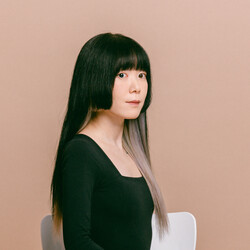
Joanne Yi grew up in Orange County, California, and currently resides in Los Angeles. She graduated from the University of California San Diego and holds an MFA in creative writing from Antioch University. When she’s not writing, she enjoys baking, horror films, Korean dramas, and spicy food. You can visit Joanne online at JoanneYi.com and on Instagram @WritingJoJo.
Why We Love It
“Joanne Yi’s lyrical prose is just beautiful and so engaging, and reading this for the first time made me ugly-cry in public. Yes, the story is sad in parts, but as a character in the novel says, ‘Oh, but that twinge in my chest. All that feeling, springing forth. Isn’t it beautiful, just to feel?’ And that’s how I feel about this novel: it made me feel so much in the best and most beautiful kind of ways, and I felt catharsis and ultimately hope as Winter grows throughout the story and experiences love and hope for the first time.”
—Kristie C., Associate Editor, on All the Tomorrows After
Product Details
Publisher: Atheneum Books for Young Readers (August 4, 2026)
★ "Love wrapped up in loss, sharply etched characters, a strong sense of place, and the need to belong—whether with family or friends—makes Yi’s debut an absorbing read. . . A powerful, deftly told story of loss and love that will linger in readers' hearts."
– Kirkus Reviews, STARRED REVIEW
"A story of heartbreak and choiceless resilience . . . Winter’s tender story encourages imagining others as complexly as we see ourselves. Hand to fans of Kelly Yang and Mary H. K. Choi."
– Booklist
"Yi captures the depth and physicality of grief . . . as [Winter] opens up and learns that 'everyone has some ugly inside them' and that she doesn’t have a monopoly on pain, the story also blossoms, with no character in black and white."
– BCCB
A Kirkus Reviews Best Book of the Year
A July/August 2025 Indies Next Pick
A Summer/Fall 2025 Indies Introduce Selection
&★ "Love wrapped up in loss, sharply etched characters, a strong sense of place, and the need to belong—whether with family or friends—makes Yi’s debut an absorbing read. . . A powerful, deftly told story of loss and love that will linger in readers' hearts."
– Kirkus Reviews, STARRED REVIEW
"A story of heartbreak and choiceless resilience . . . Winter’s tender story encourages imagining others as complexly as we see ourselves. Hand to fans of Kelly Yang and Mary H. K. Choi."
– Booklist
"Yi captures the depth and physicality of grief . . . as [Winter] opens up and learns that 'everyone has some ugly inside them' and that she doesn’t have a monopoly on pain, the story also blossoms, with no character in black and white."
– BCCB
A Kirkus Reviews Best Book of the Year
A July/August 2025 Indies Next Pick
A Summer/Fall 2025 Indies Introduce Selection
&★ "Love wrapped up in loss, sharply etched characters, a strong sense of place, and the need to belong—whether with family or friends—makes Yi’s debut an absorbing read. . . A powerful, deftly told story of loss and love that will linger in readers' hearts."
– Kirkus Reviews, STARRED REVIEW
"A story of heartbreak and choiceless resilience . . . Winter’s tender story encourages imagining others as complexly as we see ourselves. Hand to fans of Kelly Yang and Mary H. K. Choi."
– Booklist
"Yi captures the depth and physicality of grief . . . as [Winter] opens up and learns that 'everyone has some ugly inside them' and that she doesn’t have a monopoly on pain, the story also blossoms, with no character in black and white."
– BCCB
A Kirkus Reviews Best Book of the Year
A July/August 2025 Indies Next Pick
A Summer/Fall 2025 Indies Introduce Selection
&★ "Love wrapped up in loss, sharply etched characters, a strong sense of place, and the need to belong—whether with family or friends—makes Yi’s debut an absorbing read. . . A powerful, deftly told story of loss and love that will linger in readers' hearts."
– Kirkus Reviews, STARRED REVIEW
"A story of heartbreak and choiceless resilience . . . Winter’s tender story encourages imagining others as complexly as we see ourselves. Hand to fans of Kelly Yang and Mary H. K. Choi."
– Booklist
"Yi captures the depth and physicality of grief . . . as [Winter] opens up and learns that 'everyone has some ugly inside them' and that she doesn’t have a monopoly on pain, the story also blossoms, with no character in black and white."
– BCCB
A Kirkus Reviews Best Book of the Year
A July/August 2025 Indies Next Pick
A Summer/Fall 2025 Indies Introduce Selection
&★ "Love wrapped up in loss, sharply etched characters, a strong sense of place, and the need to belong—whether with family or friends—makes Yi’s debut an absorbing read. . . A powerful, deftly told story of loss and love that will linger in readers' hearts."
– Kirkus Reviews, STARRED REVIEW
"A story of heartbreak and choiceless resilience . . . Winter’s tender story encourages imagining others as complexly as we see ourselves. Hand to fans of Kelly Yang and Mary H. K. Choi."
– Booklist
"Yi captures the depth and physicality of grief . . . as [Winter] opens up and learns that 'everyone has some ugly inside them' and that she doesn’t have a monopoly on pain, the story also blossoms, with no character in black and white."