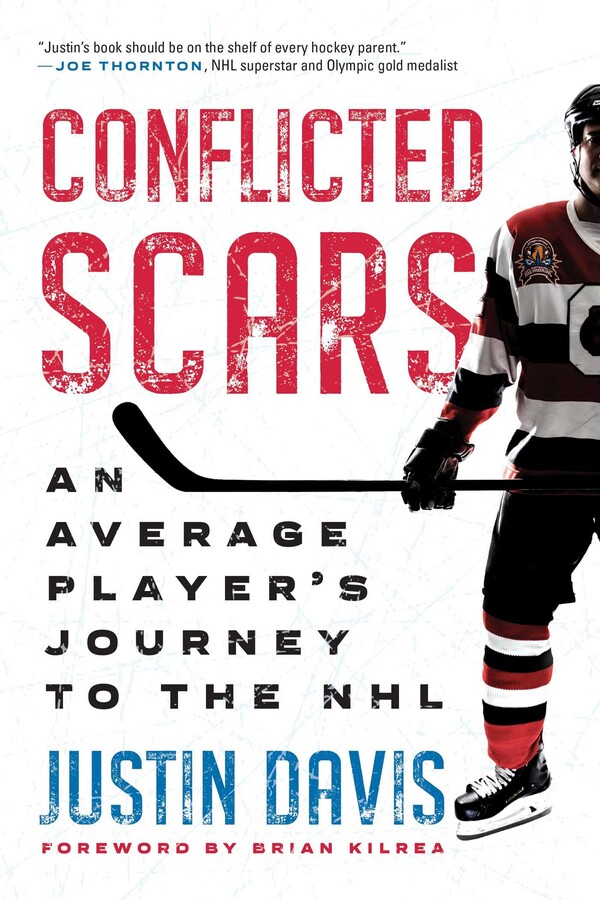
You may have seen the cover of this book and asked yourself, why?
Why would an “average” hockey player whose name barely registers with hockey fans write a book, and why would anyone bother to read it? Why would this player think that anyone would spend time reading his story when his entire hockey career is currently being overshadowed by his 16-year-old son? Well, it’s complicated. The world of hockey has had a grand reawakening, and to quote the legendary Canadian hockey broadcaster, Bob Cole, “Everything is happening.” Since 2020, a growing number of high-profile coaches have been fired because of past transgressions, and many more are secretly feeling the heat. I can guarantee you there are numerous behind-the-scenes apology tours happening as we speak, orchestrated by abusive coaches looking to maintain their place inside the game. But the dressing room doors have opened, and these predators can no longer hide behind their organizations. At the same time, junior hockey has had to address decades of hazing incidents, the research being done on CTE has been eye-opening for former players, and Don Cherry’s firing has the NHL distancing itself from its storied past. Add Akim Aliu’s letter addressing the systemic racism in the game, and one thing is certainly clear: hockey needs to get better.
When Akim Aliu first told his story, my reaction was that he was soft. In my mind, he was a terrible team player and he sounded like an egotistical, cancerous presence. We all participated in the same initiations, we were all treated terribly by veteran players, and racism was just something that we normalized. I thought he was the issue; it was our job to conform to the norms of the hockey world. Varying from those norms, especially as a player of colour, was highly frowned upon. What’s said in the room stays in the room, and it appeared to me that Akim was breaking the hockey code. I soon realized that I was the issue, not Akim. Throughout my career, I was complicit in this behaviour, and I never stood up to stop it. I was ignorant. One coach would ask an Indigenous teammate if it would be easier to send him a smokescreen than explain the drill, and anyone with an Indigenous background would be called “Chief” … I heard the N-word numerous times, in the dressing room, the stands, and on the ice, and although I knew it was wrong and wouldn’t say it myself, in my mind it wasn’t my problem. One of my childhood friends, while playing pro hockey in Germany, had bananas thrown at him during a game, but I never asked what I could do to help. Afraid of risking my own career by taking a stand, I never once spoke up to say this was wrong. Former teammates who should’ve been any coach’s favourite were somehow treated differently, even though they did everything that was asked of them. Only now can I see this clearly.