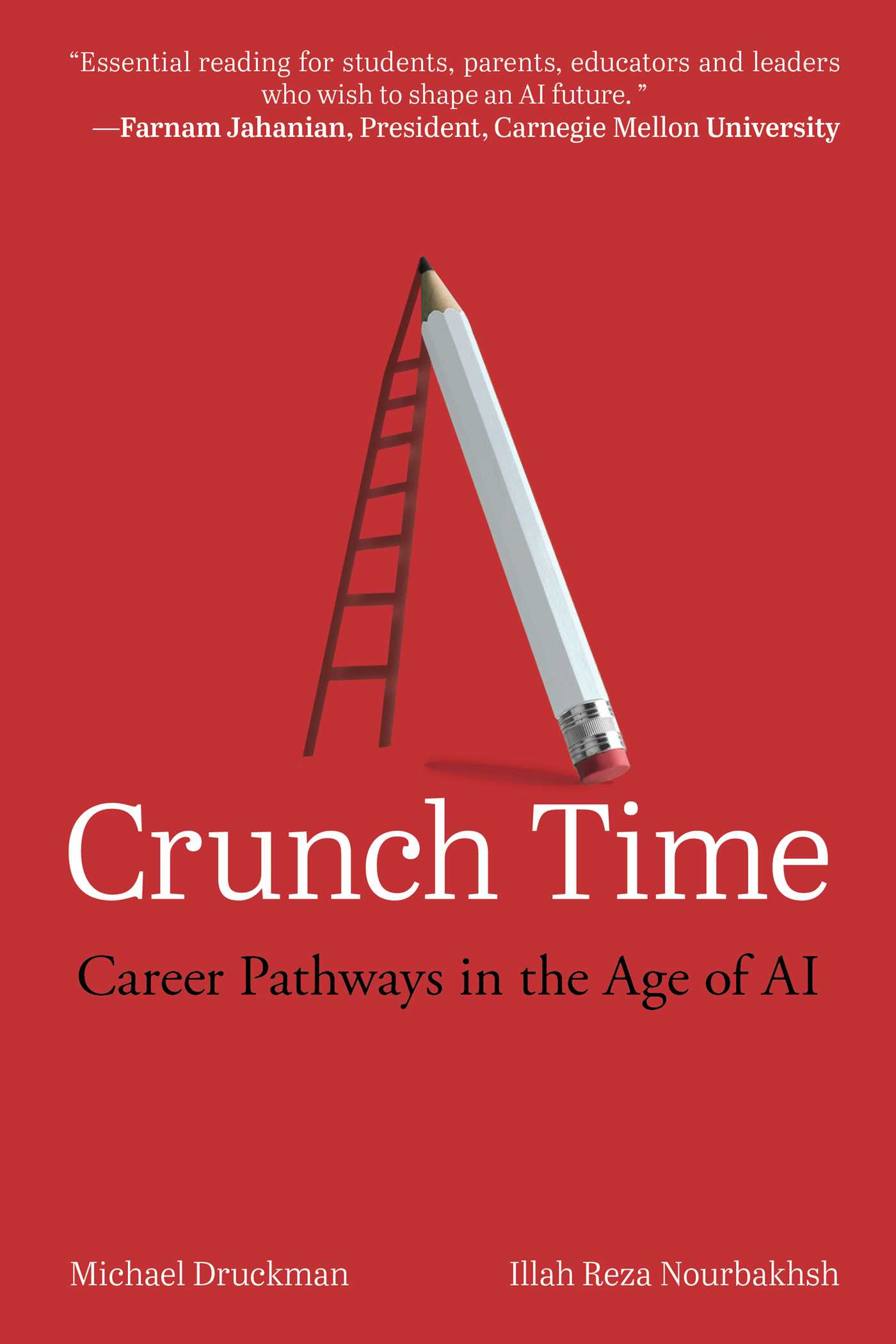
About The Book

Featuring curated essays from leaders in tech and education, Crunch Time empowers parents, educators, students, and professionals to get informed and access their agency in the AI age.

Featuring curated essays from leaders in tech and education, Crunch Time empowers parents, educators, students, and professionals to get informed and access their agency in the AI age.

The AI revolution is underway, and none of us are fully prepared. In Crunch Time, education and AI experts Illah Nourbakhsh and Michael Druckman confront one of the central questions of our time: How will artificial intelligence reshape careers, education, and opportunity, and what should we do about it now?

Rather than predicting a single future, Crunch Time presents AI as a dynamic, uncertain force that demands informed participation. Originally conceived for educators and parents, the book expands its lens to include students, alumni, mid-career professionals, employers, policymakers, and anyone navigating work and learning in the age of AI.

Crunch Time weaves together perspectives from AI inventors, business leaders, educators, technologists, and community leaders, featuring more than forty contributors including AI experts Daniela Rus, Hoda Heidari, Michael Genesereth, Sanjay Sarma, university presidents Nancy Cantor, Lisa Ryerson, Laura Walker, Juan Salgado; business leaders David Siegel, Steve Malony, Dan Draper; visionaries Dame Diane Coyle, William Haseltine, Paul LeBlanc; and leading K to 12 educators. Readers will encounter competing viewpoints, practical guidance, and concrete steps for action.

Crunch Time is an invitation to understand, to prepare, and to actively shape a more equitable and human-centered AI future.
Excerpt

The AI revolution is underway, and we are all unprepared. Look to the blogosphere to try to learn more about AI’s impacts, and you will find confusion and lack of consensus everywhere. There are curious optimists who see a golden renaissance of science opening the door to advances that will improve all lives. There are doomsday pessimists who predict AI will disrupt entry-level white-collar jobs and trigger massive unemployment. It is no wonder we are caught in a state of chaotic curiosity. It is this uncertainty that motivated us to write this book. Initially we thought our combined expertise could benefit today’s educational community: students, teachers, administrators and parents. But we’ve realized that everyone needs this information, so our audience grew to alumni, young adults, and adults in mid-career transitions. But even that is not enough. AI is touching everyone – every job, and everyone we care about. We all deserve to understand this global phenomenon that touches our careers, our nations’ economics and the lives of every person we care about.

What to anticipate in our book

AI will affect all of us in many ways, but in this book, we will concentrate on the issue of career pathways in particular. We want to provide practical context and advice, sharing insights that will support readers in drawing their own conclusions and formulating their own action steps. From inception, we envisioned asking a cross-section of highly respected educators, academics, business and community leaders to add their voices in the form of essays, so readers could benefit from a broad range of expertise and opinion. AI is a dynamic, uncertain, and complex topic; therefore, we wanted our book to take the reader’s intelligence seriously and present you with a diversity of perspectives. We are fortunate, as authors, to have a friend network that connects every aspect of AI – presidents and provosts of colleges and community colleges, K-12 school leaders, teachers, students, economists, AI inventors, Tech CEO’s, techno-historians, policymakers. Our book is more than the writings of two authors – it is an unrivaled collection of thoughtful essays by over forty guest writers that share directly with you. Through our collection of writers, you will discover conflicting perspectives, thoughtful predictions, as well as practical steps you can take to better prepare for the changes coming. This book covers several major themes and concerns:
  • Where the evolution of AI currently stands
  • Three unprecedented forces and a demographic milestone occurring simultaneously that we’re (currently) ill-prepared to tackle as a society.
  • The imperative to develop human skills throughout our education-to-employment journey.
  • The need to rebuild our education-to-employment pathway to ensure students, teachers, school leaders, parents and employers adapt to the needs of the AI age
  • The need to overcome silos that make problem-solving at urgent, transitional moments incredibly difficult
  • The need for companies and universities to view re-skilling and training as an opportunity
  • The need to address gender and racial equity challenges that define who has access to the powerful AI tools being developed
  • The need for all of us to become active participants in influencing the outcomes at the early stages of the AI age.


Regarding this last theme, we have been surprised by the “kick the can down the road” approach we’ve seen amongst industry insiders, politicians, and the public. There are some good reasons for delayed regulatory action. But doing nothing to protect people, and bend the future of AI in a sustainable and responsible direction, is just not acceptable. Clearly, where AI is concerned there is a cultural sense of inevitability, a lack of control, and not knowing what to do. The power brokers in AI – the companies that are inventing AI with billions of dollars of investment, have marketed their particular, favorite AI directions as inevitable and life-changing, with little room for real conversation amongst the public. Then there is the natural human compulsion to procrastinate, especially in the face of murkiness or anxiety. These challenges motivated us to provide clarity and actionable steps, to ensure positive individual and societal outcomes at a crucial time of change. For positive progress to occur, we need to step out of our echo chambers and empower ourselves with facts – about AI, about the companies that stand to benefit from its “inevitability,” and about how it might impact our work. The truth is that nothing about AI is written in stone, and the main group that has the public’s best interest at heart as we face real decisions about AI’s future is you – the public. Nothing is inevitable, and armed with knowledge we can all ensure that a revolutionary technology is actually always on our side.

About The Authors

Illah R. Nourbakhsh is Kavcic-Moura Professor of Robotics at Carnegie Mellon University, inaugural Executive Director of the Center for Shared Prosperity, and co-director of the Community Robotics, Education and Technology Empowerment Lab. He was the Inaugural K&L Gates Professor of Ethics and Computational Technologies. He obtained his PhD in Computer Science from Stanford University. In 2009 the National Academy of Sciences named him a Kavli Fellow. In 2013 he was inducted into the June Harless West Virginia Hall of Fame. He was previously Robotics Group Lead for NASA/Ames during the MER landings, and is a retired civil servant, NASA GS15/10. In 2019 he was named a Hastings Fellow. He has co-authored textbooks and popular literature, including Turn Left, AI and Humanity, Robot Futures, and Parenting for Technology Futures. He has authored articles for The New Yorker and Foreign Affairs, in addition to academic journals and book chapters. He is a trustee of the Claude Worthington Benedum Foundation, Winchester Thurston School and the Southwestern Pennsylvania Environmental Health Project. He is a Director at Open Planet, a London-based Community Interest Corporation, and also President and a director at Friends of Open Planet, a 501(c)3 based in the United States.

Michael Druckman is the Executive Chairman and architect of Schools That Can, a national not-for-profit network of urban K to12 schools since 2006 that prepares historically marginalized youth for post-secondary success. He currently is a Fellow of the Leadership and Society Initiative at the University of Chicago. Michael established the “Senator Robert F. Kennedy Education Awards” in partnership with Robert and Ethel Kennedy Human Rights in 2014 to recognize K to 12 school leaders, teachers and students for moral courage and the “Schools That Can Leaders That Can Awards” in 2017 to recognize leaders giving back to our society’s well-being in service of our youth. Both recognitions remain active. Michael chaired the Trey Whitfield School board in East New York, Brooklyn for many years, served on the Portal Learning board in Los Angeles, acted as an advisor to many K-12 schools over the last twenty years and was recognized as Founding Chairman Emeritus of the NYU Center for Global Affairs where he served as Co-Chairman for fourteen years.

Product Details

  • Publisher: Sentient Publications (October 27, 2026)
  • Length: 375 pages
  • ISBN13: 9781591813798

Browse Related Books

Raves and Reviews

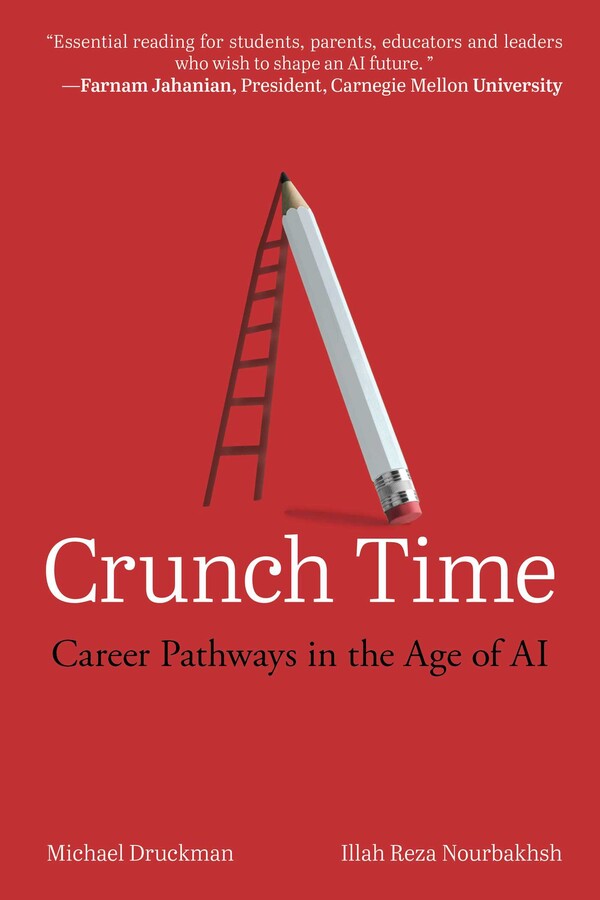
This timely and empowering book is essential reading for students, parents, educators and leaders who wish to shape an AI future that expands opportunity and strengthens our shared humanity. 

– - Farnam Jahanian, President, Carnegie Mellon University

For a book about artificial intelligence, this is brimming with human intelligence. You'll find thoughtful, nuanced, and provocative strategies for growing up and thriving in the age of AI. This book challenges us to redesign the connection between education and employment with intention and courage. This is a powerful call to ensure the AI age expands opportunity and strengthens pathways to meaningful work for all.

– - Lisa Marsh Ryerson, President, Southern New Hampshire University

Our youth are growing up in the middle of a massive transition into the age of AI. Smart guides are critical to navigating this rough terrain, and this book is one of those guides. It elevates the power of human intellect and creativity, providing much-needed guidance on how to harness new technologies for the good of society and humanity. 

– – Lisa Guernsey, Senior Director of Birth-12th Grade Policy, New America

This volume smartly and creatively tackles what it means to cultivate the talent in our own backyards, with the durable skills necessary to take charge of the "A.I revolution" in the service of the better, more inclusive, and more adept generation of innovators we all depend upon going forward.

– - Nancy Cantor, President of Hunter College

An essential and thoughtful guide for anyone navigating career transitions, building institutions, or shaping the systems that will define the AI era.

– Steven Malony, CEO, Belkin International

… A timely reminder that meaningful progress with AI depends on human judgment, values, and leadership.


– - Pravina Ladva,  Chief Digital & Technology Officer, Swiss Re

This powerful guide highlights that successful educational institutions in the age of AI will both teach highly relevant skills and also provide thoughtful supports that ensure every learner feels cared for and prepared to adapt and thrive.

– - Chancellor Juan Salgado, City Colleges of Chicago

Resources and Downloads

High Resolution Images

BACK TO TOP