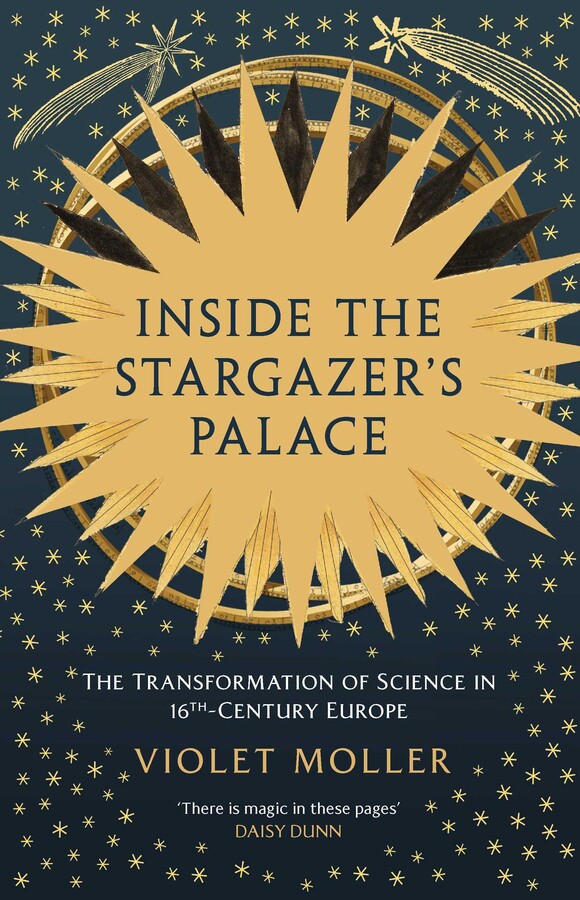
"Moller (The Map of Knowledge, 2019) looks at the development of scientific thinking, standards, and instrumentation in sixteenth-century Europe. In previous eras, scientific thinking in Europe had been speculative, and the disciplines of astronomy, alchemy, and astrology were highly prestigious. Moller argues that work performed by thinkers such as John Dee, Tycho Brahe, Johannes Kepler, Regiomontanus, and others in centers of scientific inquiry formed the framework for modern science with its focus on accuracy and collaboration and led to the decline of alchemy and astronomy as disciplines. She frames her discussion around the centers, describes the work performed and the lives of the scientists, their collaborators, and other inhabitants. The patronage system as well as the religious upheaval following the Reformation and political unrest also played a large role in influencing the direction of scientific thought. Moller closes by describing the future of science as influenced by her subjects. A good addition to the history of science and the scientific revolution."
– Rebekah Kati, Booklist
"The run-up to the Scientific Revolution in expert hands. Award-winning historian Moller focuses on the 1500s, delivering a riveting account of that century by focusing on pioneers who are unknown to many readers."
– Kirkus Review
Praise for Violet Moller:
"An endlessly fascinating book, rich in detail, capacious and humane in vision.”
– Stephen Greenblatt, author of The Swerve: How the World Became Modern
“A lovely debut from a gifted young author. Violet Moller brings to life the ways in which knowledge reached us from antiquity to the present day in a book that is as delightful as it is readable.”
– Peter Frankopan, author of The Silk Roads
“Through Moller’s imagination, the reader is invited to marvel at how multicultural the ancient world was, and to consider how the foundational knowledge of the Western world did not simply leap from the ancient Greeks to modern times but was painstakingly preserved, analyzed and innovated upon for almost 1,000 years.”
– Rachel Newcomb, Washington Post
“An epic treasure hunt into the highways and byways of stored knowledge across faiths and continents.”
– John Agard poet and judge, Royal Society of Literature 2016 Jerwood Award
“A sumptuous, glittering, endlessly fascinating book, written with passion, verve, and humor.”
– Catherine Nixey, author of The Darkening Age