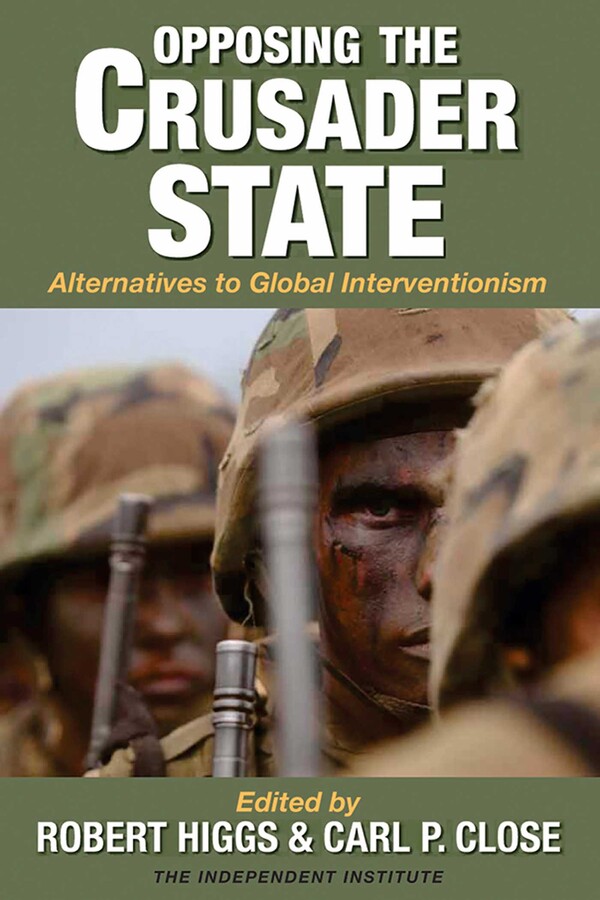
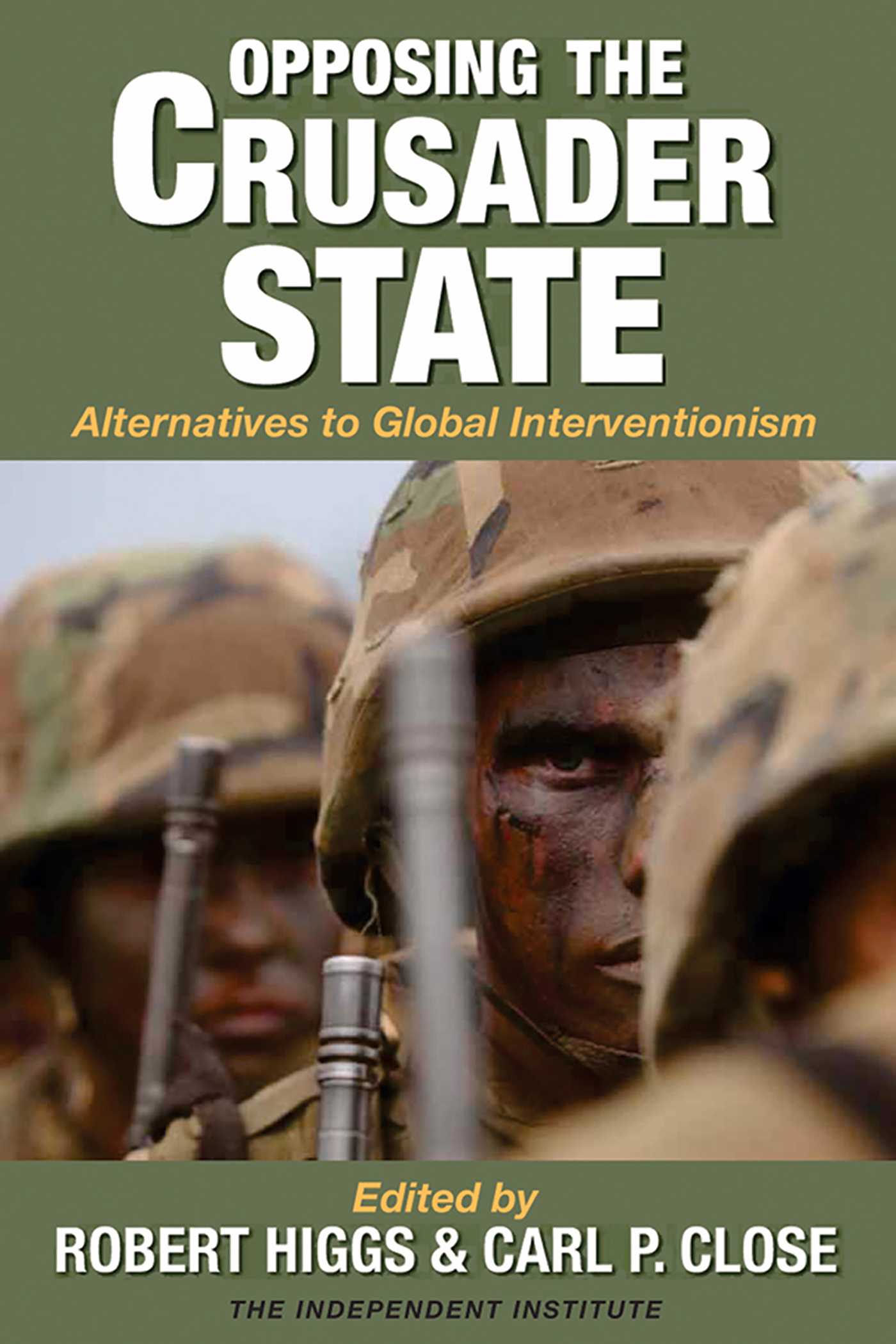
“If you want to know why making the world safe for democracy is both foolhardy and impossible, read Opposing the Crusader State. Here in a nutshell is the best scholarship available on how our warrior governments went wrong and why their non-defensive wars have diminished, rather than enhanced, our freedoms.”
– JUDGE ANDREW P. NAPOLITANO, Senior Judicial Analyst, Fox News Channel; author, The Constitution in Exile
“Opposing the Crusader State deserves to be widely read and discussed. The issues are vital, critical; the timing perfect; the editors knowledgeable and selective; the writers expert, thoughtful and articulate.”
– AMBASSADOR EDWARD L. PECK, former Chief of Mission in Iraq
“Opposing the Crusader State offers insight into the long and often ignored American political tradition of opposing foreign interventions. Once again, we are learning the hard way the foolishness of nation building beyond our borders, interests, and knowledge. This important book should be required reading for our many would be global democracy spreaders.”
– HARVEY M. SAPOLSKY, Professor of Public Policy and Organization and former Director, Security Studies Program, Massachusetts Institute of Technology
“For those disillusioned by the American intervention in Iraq, the insightful book Opposing the Crusader State shows how the U.S. can protect its interests by embracing a more humble foreign policy.”
– LAWRENCE J. KORB, former Assistant Secretary, U.S. Department of Defense
“In Opposing the Crusader State, Higgs and Close (both, Independent Institute) focus on U.S. foreign policy alternatives to global intervention. They argue that until the 20th century, U.S. foreign policy pursued economic expansion without military intervention in foreign countries. Yet starting with the Spanish American War, the U.S. became a crusader state, using military might in ways that compromised the nation’s founding principles at high economic cost. . . . The value of this book is twofold: first, it challenges the use of military intervention as the primary tool to promote and protect U.S. interests; second, it raises critical questions of war and peace while offering alternatives to military intervention. Recommended.”
– CHOICE