About The Book

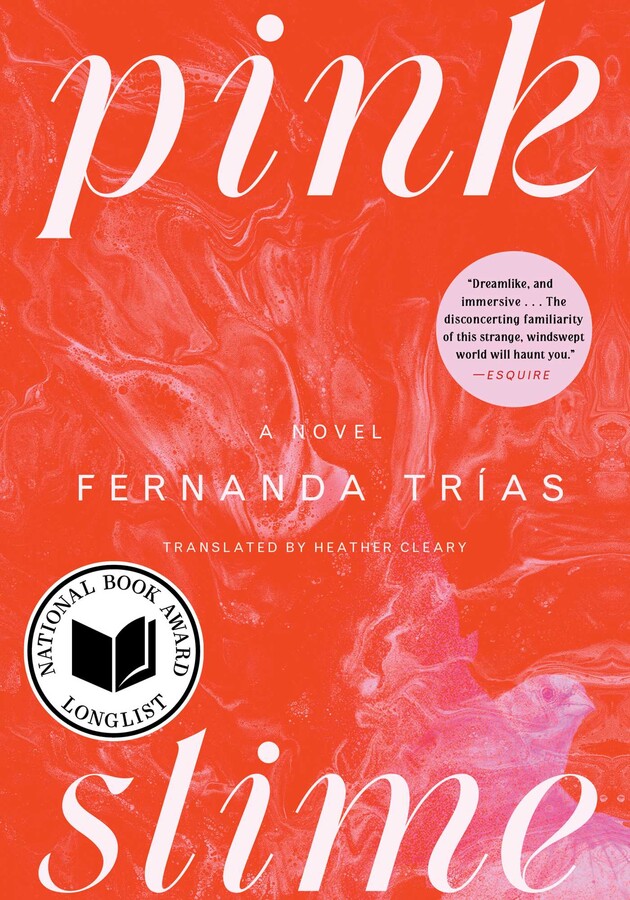
Longlisted for the NATIONAL BOOK AWARD for Translated Literature • Named a BEST BOOK of the Year by NPR, Esquire, Publishers Weekly, and ScreenRant • “The disconcerting familiarity of this strange, windswept world will haunt you.” —Esquire

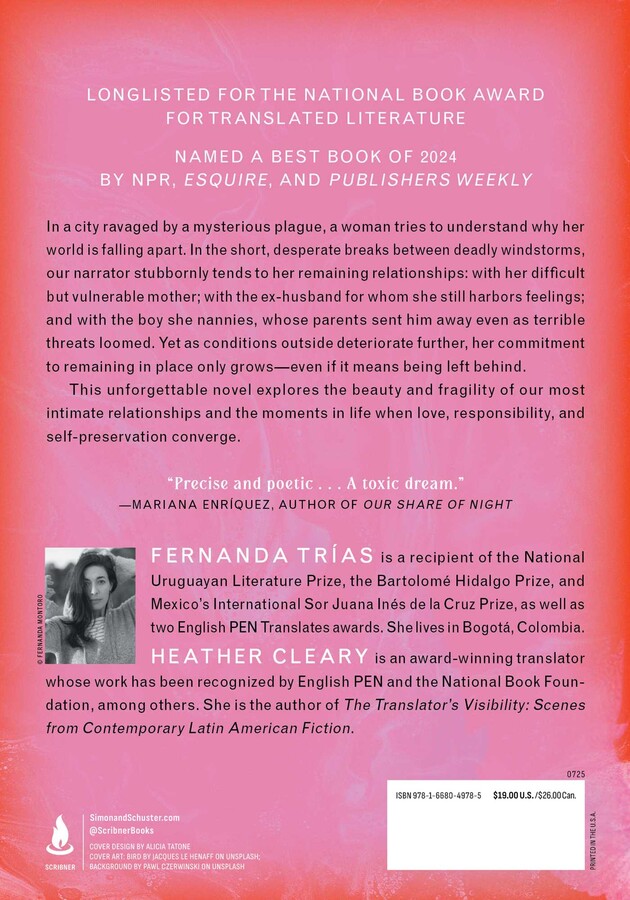
A hair-raising, poetic work of literary horror and climate fiction about a woman and the people who depend on her as the world around them edges toward apocalypse.

In a city ravaged by a mysterious plague, a woman tries to understand why her world is falling apart. An algae bloom has poisoned the previously pristine air that blows in from the sea. Inland, a secretive corporation churns out the only food anyone can afford—a revolting pink paste, made of an unknown substance. In the short, desperate breaks between deadly windstorms, our narrator stubbornly tends to her few remaining relationships: with her difficult but vulnerable mother; with the ex-husband for whom she still harbors feelings; with the boy she nannies, whose parents sent him away even as terrible threats loomed. Yet as conditions outside deteriorate further, her commitment to remaining in place only grows—even if staying means being left behind.

An evocative elegy for a safe, clean world, Pink Slime is buoyed by humor and its narrator’s resiliency. This vivid and unforgettable translated novel explores the place where love, responsibility, and self-preservation converge.

Excerpt

Chapter 1
When the fog rolled in, the port turned into a swamp. Shadows fell across the plaza, filtering between the trees and leaving the long marks of their fingers on all they touched. Under each unbroken surface, mold cleaved silent through wood, rust bored into metal. Everything was rotting. We were, too. If I didn’t have Mauro, I’d spend all day wandering around, guided through the fog by the neon sign flickering in the distance: PAL CE HOTE. The missing letters hadn’t changed, though it wasn’t a hotel anymore; like so many other buildings in the city, it had been taken over by squatters. What day was that? Sometimes I can still hear the neon, its electric hum and the crackle of another letter on the verge of shorting out. The squatters kept the sign lit, but not out of laziness or nostalgia. They did it to remind themselves they were alive. That they could still do something arbitrary, something purely aesthetic. That they could still transform the landscape.

If I’m going to tell this story I should choose a starting point, begin somewhere. But where? I was never any good with beginnings. The day I saw the fish? Certain details leave their mark on time and render a moment unforgettable. It was cold, and the fog condensed into droplets on the overflowing dumpsters. I don’t know where all that garbage came from. It seemed to consume and excrete itself. And how do you know we’re not the waste? Max might have said something like that. I remember turning at the old corner store, with its windows boarded over, and how the greenish-red light of the hotel sign washed over me as I stepped onto the rambla.

Mauro would be back the next day, bringing with him another month of confinement and work. Cooking, cleaning, monitoring his every movement. Each time they came to collect him I spent a whole day catching up on the sleep he threatened or interrupted. This endless vigil was the reason Mauro’s parents paid me the exorbitant salary they knew would never compensate me. Breathing in the stale air of the port, prowling the streets, visiting my mother or Max—these were the luxuries I afforded myself on the days my time didn’t carry a price. If I was lucky, that is, and there was no wind.

The only people on the rambla were fishermen with the collars of their jackets pulled up around their ears, their hands red and cracked. The water stretched wide in all directions, an estuary where the river became a shoreless sea. The fog blurred the horizon. It was ten o’clock or eleven or three under that flat, milky light. The algae floated nearby like bloodshot phlegm, but the fishermen seemed not to care. They rested their buckets next to their beach chairs, baited their hooks, and gathered the strength of their brittle arms to cast their lines as far as they could. I liked the sound of the reels spooling out: it reminded me of summers spent riding my bicycle in San Felipe, no brakes, knees angled high to avoid the pedals. That bicycle contained my whole childhood, just like those beaches that would later be cordoned off with yellow tape the wind would periodically destroy and a few policemen in face masks would rehang. KEEP OUT, it said. Why? You’d have to be crazy to want to go like that: infected, exposed to a nameless disease that didn’t even promise a speedy death.

Once, long before I married Max, I saw fog as dense as it was that day. It was in San Felipe, just before dawn, sometime in early December. I remember because the beach town was still empty, except for the few of us who had been summering there all our lives. Max and I walked slowly along the road, not looking at the black sand of the beach, accustomed to the rhythm of the breaking waves. That sound was like a watch to us, a certainty of all the summers to come. Unlike the tourists, we didn’t go to San Felipe to get away from it all. We went there to affirm the continuity of something. It was pitch-dark except for Max’s flashlight, but we knew the way. We stopped near the lookout, where lovers often hid, and leaned over the white wooden banisters. Max pointed his flashlight at the beach and through the fog we saw a swarming mass of crabs. The sand seemed to breathe, to swell like a sleeping beast. The crabs gleamed in their halo of light, they gushed from cracks in the boardwalk. Hundreds of them, tiny. What did Max say? I don’t remember. I think we were both shaken, as if we had just been alerted to the existence of something incomprehensible, something bigger than ourselves.

In winter along the rambla, though, there was no sign of so much as a mullet. The fishermen’s buckets were empty, their bait waiting useless in plastic bags. I sat down near a man wearing a Russian-style hat with earflaps. My hands trembled from the cold, but I didn’t do anything to still them. Unlike Max, I didn’t view a person’s will as independent from their body. This belief had led him to dedicate the last few years to extravagant experiments: purges, privations, weights hooked through his skin. The ecstasy of pain. The fasting organism is a single vast membrane, he would say, a thirsty plant left too long in the dark. Maybe. But Max was after something else: to separate himself from his body, that indomitable desire-generating machine, which knew neither conscience nor limits—repugnant but also innocent, pure.

The fisherman sensed I was looking at him. With my feet dangling over the water, my maskless face, and my backpack, which seemed to be loaded with stones, he must have thought I was another lost soul ready to jump into the river. Maybe my whole family was dead, admitted one by one to the critical care wing at Clinics, never to emerge. The water barely made a sound as it lapped against the seawall and the air was completely still. How long could this calm last? Every war had its cease-fires, even this one we fought unarmed.

The line suddenly tensed, and I watched the fisherman cinch and reel in until a small fish popped into the air. It arched weakly, but the glint off its silvery scales brought a smile to the man’s face. He grabbed it with his gloveless hand and removed the hook. No one could know what death and what miracle that animal held within it, and the two of us admired it accordingly. I expected the man to drop it into his bucket, even if just for a little while, but he threw it back immediately. It was so slight that it made no noise as it broke the surface. The last fish. One minute later and it would be far away, immune to the dense seaweed, to the death trap of algae and waste. The man turned to look at me, gesturing with his hand. This is the starting point I choose for my story, its false beginning. I could easily make an omen of it, justify it as a sign of things to come, but I won’t. That’s all: an hour like any other on a day like any other, except for the fish that soared through the air and fell back into the water.

Reading Group Guide

Reading Group Guide

PINK SLIME

Fernanda Trías

This reading group guide for Pink Slime includes an introduction, discussion questions, and ideas for enhancing your book club. The suggested questions are intended to help your reading group find new and interesting angles and topics for your discussion. We hope that these ideas will enrich your conversation and increase your enjoyment of the book.

Introduction

As an unknown plague ravages the port city she calls home, a woman finds herself reluctant to leave even as, all down the coast, most residents have begun the slow exodus inland. A mysterious algae bloom has poisoned the air, making regular food production a luxury of the past. To stave off famine, a secretive corporation churns out the only food anyone can afford—a nauseating pink paste made of unknown animal products.

During the short reprieves between the deadly red windstorms, our narrator attends to her fraught relationship with her mother, her ex-husband, and Mauro, the young boy whom she nannies and who has been all but abandoned by his wealthy parents. Defying all logic in the face of worsening conditions with no end in sight, her desire to stay only hardens, even as her surroundings slowly become a ghost town.

Depicting a future not so distant from our own, Pink Slime attends to the death rattle of mutual care, community, and collectivity—the place where love, duty, and self-preservation converge, and what remains of fragility and the sublime at the end of the world.

Topics & Questions for Discussion

1. In the beginning, the narrator observes: “The squatters kept the sign lit, but not out of laziness or nostalgia. They did it to remind themselves they were alive. That they could still do something arbitrary, something purely aesthetic” (page 2). What other things, commonplace as they may seem to us, have become anachronistic luxuries in this dystopian future? What other choices, innocuous as they may be, do various characters make throughout the novel to assert their ongoing humanity in a period of unprecedented instability?

2. With hindsight, the narrator is able to see the vast differences between herself and her ex-husband, Max. For example, on a philosophical level, Max believes that “a person’s will [is] independent from their body,” (pages 4–5) leading him to attempt to “separate himself from his body, that indomitable desire-generating machine, which knew neither conscience nor limits” (page 5). The narrator feels differently but stops short of stating her own philosophy about human will and its relationship to the body. How would you characterize the narrator’s orientation to this question? Does she seem to have one? What other moments throughout the novel might help you answer this question?

3. At the beginning of each chapter is an imaginary dialogue. How did these dialogues affect your experience of the novel, specifically the chapters that they preceded? What function do they serve? As you were reading, how did you feel that these dialogues spoke to each other across chapters?

4. When we meet the narrator’s mother, it’s in a mansion in Los Pozos that she’s renting out at a steal from its owners, who want to avoid squatters taking over their property. Eating scones with the owners’ silver butter knives, the narrator notes these are “luxuries only a disaster could have afforded us” (page 11). What do you think she means by this?

5. As a rare “chronic,” Max’s ability to stay alive is medically baffling but coveted as the key to finding a cure for the mysterious plague brought on by the red wind. The narrator, however, seems to think that part of Max’s ability to stay alive is his innate stoicism: “the ability to stay alive by virtue of incredulity or indifference” (page 23). What is the narrator’s experience of Max’s prolonged illness? In what ways does it preternaturally extend their relationship?

6. Throughout the novel, the narrator returns again and again to the idea of a false beginning: “The beginning is never the beginning. What we often mistake for the beginning is just the moment we realize something has changed” (page 30). Find another passage in which the narrator contemplates this idea—why is she so intent on emphasizing this? Why is it so meaningful to her?

7. Mauro’s unnamed syndrome, an inability to feel full or think about anything other than eating, occupies the narrator’s every waking (and resting) moment while she’s caring for him. How does this bottomless need to consume, this perpetual emptiness, dramatize the growing privation of their surroundings?

8. The narrator’s caustic relationship with her mother is broached many times throughout the novel. Find a specific passage related to this and discuss it as a group—if their relationship is so negative, what continues to tether them together? What nuance can you find in the animosity they have for each other?

9. The narrator’s remaining relationships, those with her mother, Max, and Mauro, are peppered with irresolvable contradictions exacerbated by the rapid deterioration of the environment. Trías writes, “I’ve always confused fear with love: that unstable ground, that landslide zone” (page 68). There is certainly love in all these relationships, but where do you see fear operating in them? Do you agree with the narrator that love and fear are hard to distinguish from each other?

10. The narrator often reminisces about Delfa, the woman her mother employed to take care of her as a child. The question of caregiving and the responsibility we have to others is at the center of the novel. How does Delfa figure into this discussion? How does she complicate it and how does she illuminate it?

11. On page 87, the narrator likens the state’s providing of Meatrite, or pink slime, for a populace slowly being priced out of fresh food, to that of a mother’s thankless work of providing for her ungrateful children. What do you think of this comparison?

12. Throughout the novel, the narration will sometimes briefly change tense, from past to future, and then back again. Locate some of these moments. Why do you think Trías is doing this? What does it accomplish, and why do you think Trías has altered the tense of these specific passages?

13. The narrator is very suspicious of laundered narratives being fed to the public through radio and TV, having worked at a magazine called The Good Life, which churned out sanitized, peppy narratives about the climate disaster and resulting epidemic at the behest of the Ministry of Health. How do these narratives play a role in the novel? What other false narratives are at play, not disseminated by the state but circulated interpersonally and through the community itself?

14. While looking for a black market, the narrator stumbles upon a caged bird, disfigured by neglect and disease. What effect does it have on her? Do you think it has a symbolic quality? Discuss with the group.

15. Toward the end of the novel, the narrator begins throwing away her hard-earned money, the funds that will allow her to escape the town that is becoming more of a hellscape every day. What do you make of this decision? How do you understand this choice—what does it symbolize in the novel, what does it mean to her personally?

Enhance Your Book Club

1. Read another work of speculative fiction that deals with resource depletion in a dystopian future, such as Tender Is the Flesh by Agustina Bazterrica. What similarities do you see between the novels? How would you compare their styles and their outlook on human nature?

2. Read Trías’s other novel available in English, The Rooftop. In what ways do you feel that these novels speak to each other? What themes and throughlines seem to link these novels together?

3. The “pink slime” of the novel resembles a commodity that currently exists in our world, allegedly used in the making of fast food. A large part of the novel is concerned with how the unsavory aspects of contemporary living are repackaged with a positive spin by corporations and the state. How are corporations of our world talking about our version of pink slime? Can you think of any other analogs for pink slime that currently exist in the food industry?

About The Author

Photograph by Fernanda Montoro

Fernanda Trías is an award-winning Uruguayan writer based in Colombia, and the author of four novels and two short story collections. Her novels The Rooftop and Pink Slime have been published in English, and translation rights to her work have been sold in twenty languages. Pink Slime was longlisted for the National Book Award for Translated Literature and received Uruguay’s National Literature Prize, the Bartolomé Hidalgo Critics’ Award, and Mexico’s Sor Juana Inés de la Cruz Prize. In 2025, Trías became only the second writer in the history of the Sor Juana Inés de la Cruz Prize to win the award twice, receiving it for The Mountain Woman, which was widely featured on best-of-the-year lists across the Spanish-speaking world.

Product Details

  • Publisher: Scribner (July 22, 2025)
  • Length: 240 pages
  • ISBN13: 9781668049785

Browse Related Books

Raves and Reviews

"An intimate, melancholic look at an ecologically ravaged future."—Silvia Moreno-Garcia, New York Times bestselling author of Mexican Gothic

“The disconcerting familiarity of this strange, windswept world will haunt you.”—Esquire

"Elegantly translated…a well-imagined, often poetically beautiful plague story.”—Lydia Millet, New York Times

"Even if you're wary of reading a pandemic novel, give this one, by Uruguayan author Fernanda Trías, a chance... Trías conveys the horror of mass illness perfectly in this enormously unsettling, but surprisingly beautiful, novel."—Michael Schaub, NPR

"A compulsively readable work of climate fiction."Polygon

"A knockout of a story."Kirkus (starred review)

"Pink Slime is a dystopia all too near to us, in which human connections and sadness over the end matter more than any explanation of the fog and disease that shroud everything. Trías's writing, precise and poetic, turns this beautiful novel into a toxic dream, into a meditation on ruins, bodies, and solitude."—Mariana Enríquez, author of Our Share of Night

"Like a faintly distorting mirror, Pink Slime reflects back to us the image of a dying world. In this country, abandoned by God and government, the only consolation is the compassion and silent heroism of a few human beings. With her meticulous prose and the painful lucidity characteristic of her work, Fernanda Trías immerses us in a dystopia that expands around us like a poisonous perfume."—Guadalupe Nettel, author of Still Born, short-listed for the 2023 Booker Prize

"Like a nightmare, like an omen, like the lines of an exquisite poem, Pink Slime echoes in my memory long after I read it. A book has never been so relevant, necessary, painful, and simply splendid.”—Jazmina Barrera, author of Cross-Stitch

"Vivid… The novel captivates with its increasingly claustrophobic atmosphere, and Trías keenly explores the resentments that fester within a mother-daughter relationship, a failing marriage, and childcare work. Readers will be gripped."Pubilsher's Weekly (starred review)

"An eerily calm tale…told in a conversational yet purposely discomfiting future subjunctive tense... With her eerie and unnervingly probable plot, strong narrative voice, and focus on the small, beautiful moments of life amid disaster, Trias’s tale will continue to haunt readers long after they turn the final page."Library Journal (starred review)

“A beautiful elegiac meditation on parenting – in this case, the deep connection between a mother and son."—Locus Magazine

International praise for Pink Slime

“This is not a dystopia, but a full-on, technicolor apocalypse... That we are in the company of someone who truly cares makes the horror all the more visceral.”The Scotsman

"Powerful and beautifully written, this is a disturbing read, depicting a terrifyingly convincing near-future scenario. The reader shares the achingly sad narrator’s feelings as care-giver, daughter and ex-lover." The Guardian

"Trías expertly encapsulates the relationship between mother and child, obligation and affection, and the conflation of fear with love."Kill Your Darlings Magazine

"Latin American fantastika is in the midst of a remarkable renaissance. The latest of this string of exhilarating new books to find its way into English is Uruguayan novelist Fernanda Trias's Pink Slime."The Saturday Paper

"It's a dystopic work worthy of JG Ballard, where even in hopelessness there remains a flickering shard of hope or resignation."The Irish Times

"Precise, luminous, and powerful."L'indipendente

“Fernanda Trías revisits the apocalyptic novel with subtlety and intelligence; not as a heroic epic of survival, but through intense emotions and a choice that must be made.”LH magazine

"[In this] novel—which belongs to that category of books that don't leave you once you’ve finished reading but rather force you to think of them, to keep returning to them—the stubbornness upon which we all depend in order to save ourselves, those we love, and our environment begins to emerge."La Stampa

"After Samanta Schweblin's Fever Dream and Mariana Enríquez's Our Share of Night, Pink Slime by Fernanda Trías completes a triptych of extraordinary works that have come to us in the last decade from the Rio de la Plata area. Three very different novels that nonetheless share the force with which they look straight into the abyss, maintaining the lucidity necessary to focus on each revealing detail."L’Indice

“Intoxicating.”Lire

Pink Slime, like all truly great novels, etches itself indelibly onto the sensitive plate of one’s mind.”Transfuge

Resources and Downloads

High Resolution Images

BACK TO TOP