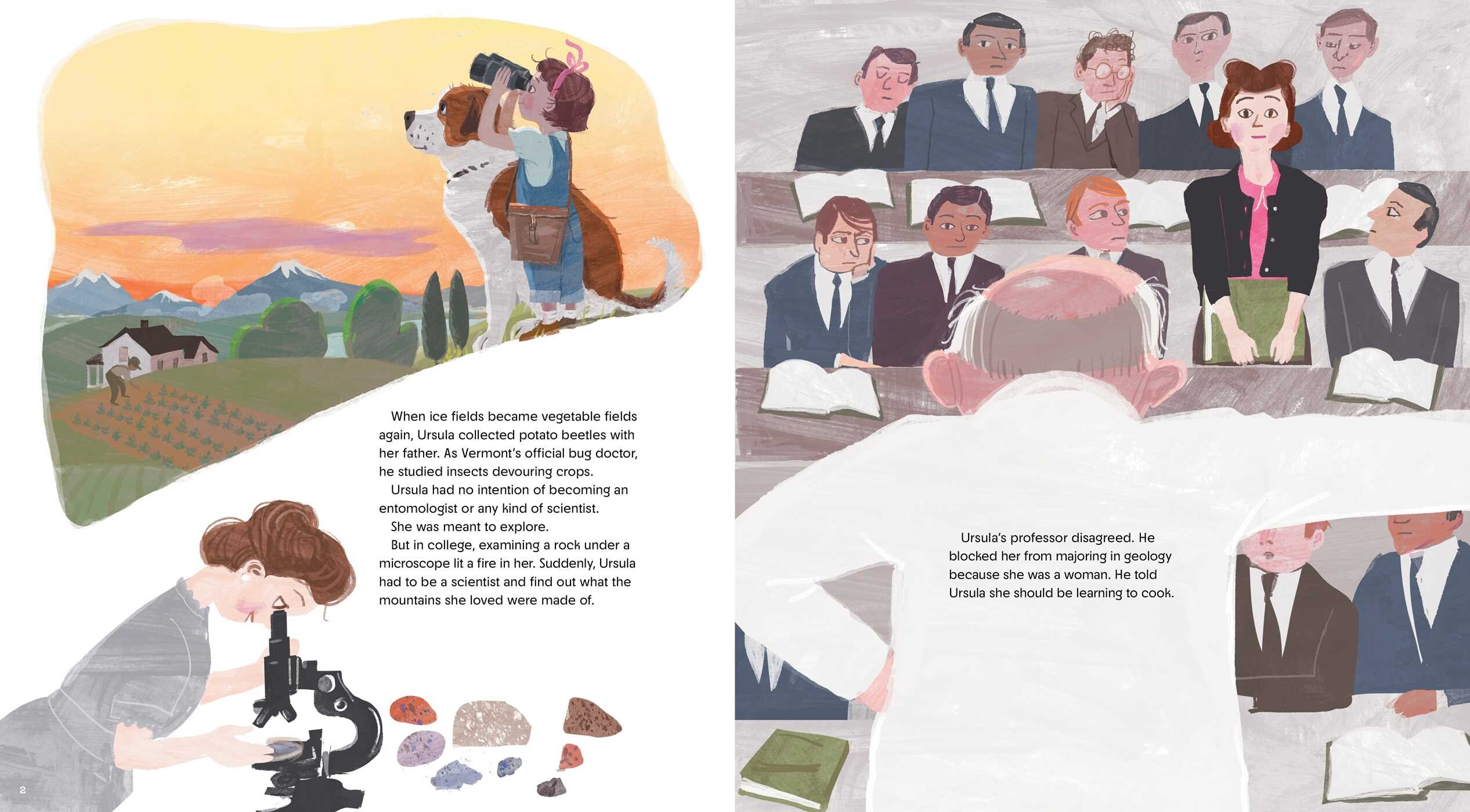
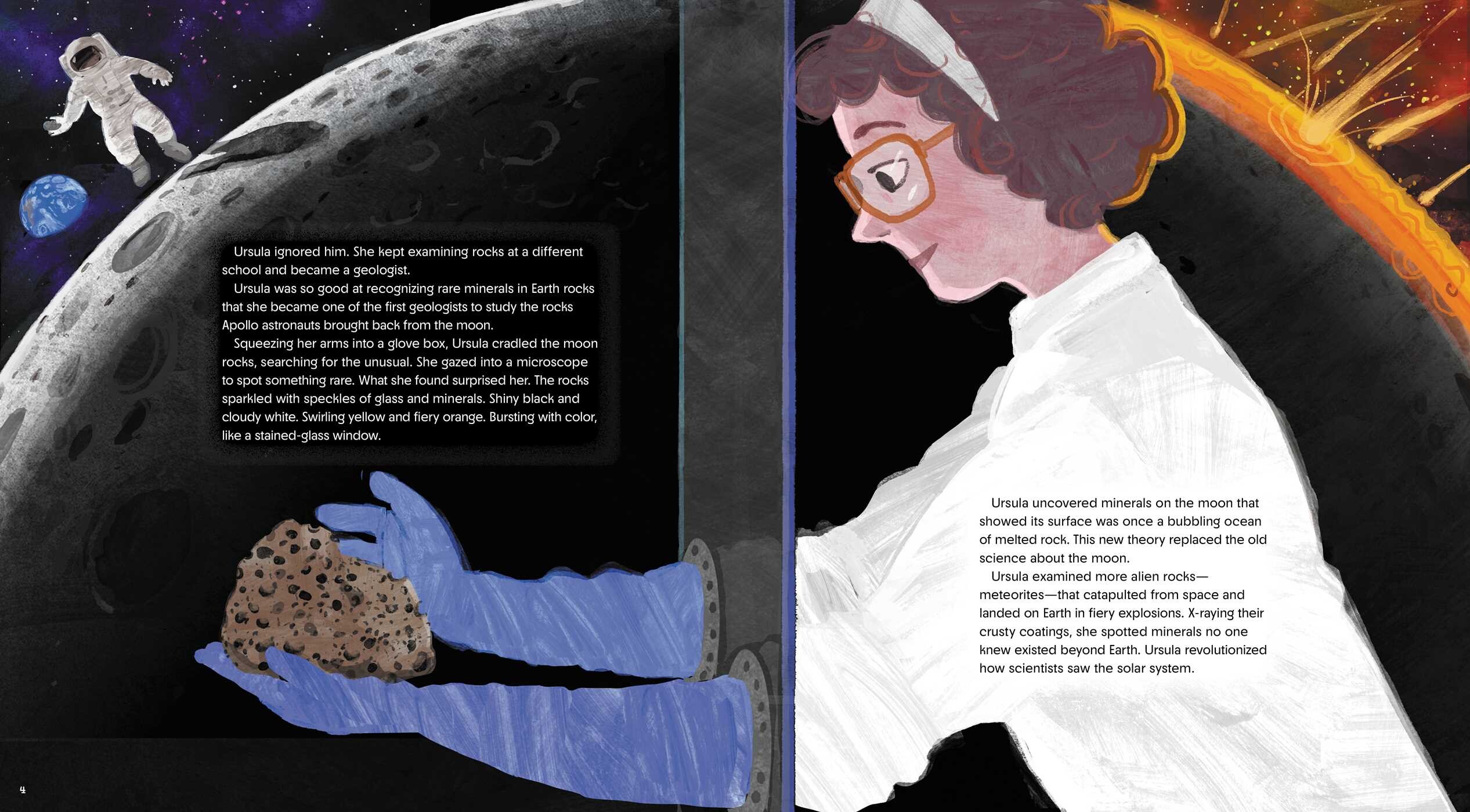
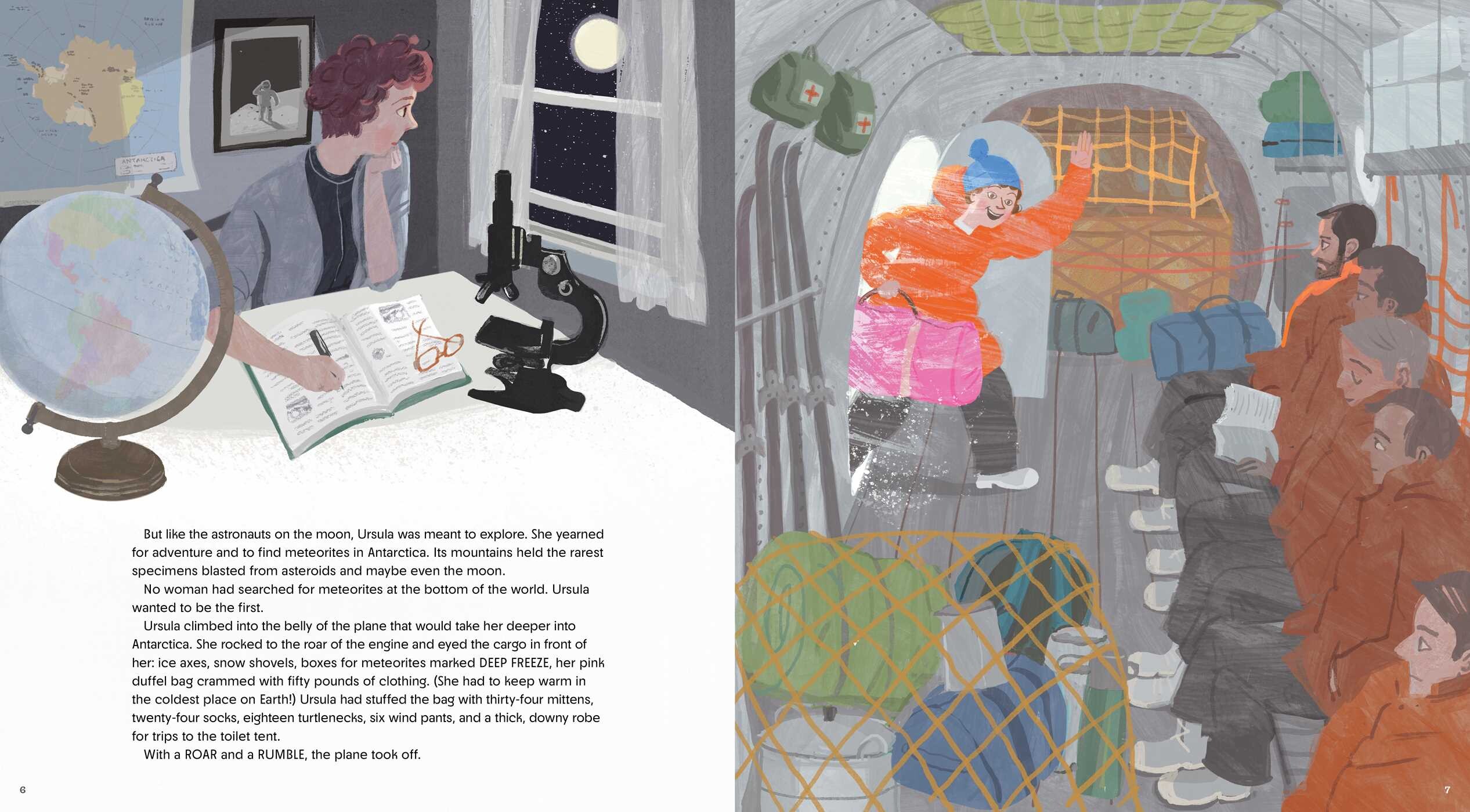
Much of what scientists know about the solar system originated in the work of geologist Ursula Marvin (1921–2018), “rock star of the universe” and one of the first to study lunar rocks. By looking at their mineral content, Marvin was able to form theories about the origins of lunar rocks and meteorites. ?is informative, inspiring look at a key figure in the field of planetary science begins with Marvin’s childhood and touches on her time in college but focuses mainly on a 1970s scientific expedition to Antarctica to discover and analyze meteorites. ?e engaging and somewhat lengthy text underscores the trailblazing nature of Marvin’s work, with subtle details that demonstrate how much sexism she faced. In college, for example, she switched schools when a professor blocked her from majoring in geology; and she was the only woman on the Antarctic expedition, where she was given men’s clothing and was sometimes excluded from research outings. She ignored the overt discrimination and carried on with her work. ?e illustrations make this point visually, showing Marvin exuberantly stepping onto an aircraft with a bright pink bag or depicting her in vibrant colors amidst male colleagues dressed drably or shown in shadow. Extensive back matter includes journal excerpts, a timeline, a bibliography, and more. JULIE
– Horn Book, November/December 2025
Much of what scientists know about the solar system originated in the work of geologist Ursula Marvin (1921–2018), “rock star of the universe” and one of the first to study lunar rocks. By looking at their mineral content, Marvin was able to form theories about the origins of lunar rocks and meteorites. ?is informative, inspiring look at a key figure in the field of planetary science begins with Marvin’s childhood and touches on her time in college but focuses mainly on a 1970s scientific expedition to Antarctica to discover and analyze meteorites. ?e engaging and somewhat lengthy text underscores the trailblazing nature of Marvin’s work, with subtle details that demonstrate how much sexism she faced. In college, for example, she switched schools when a professor blocked her from majoring in geology; and she was the only woman on the Antarctic expedition, where she was given men’s clothing and was sometimes excluded from research outings. She ignored the overt discrimination and carried on with her work. ?e illustrations make this point visually, showing Marvin exuberantly stepping onto an aircraft with a bright pink bag or depicting her in vibrant colors amidst male colleagues dressed drably or shown in shadow. Extensive back matter includes journal excerpts, a timeline, a bibliography, and more. JULIE
– Horn Book, November/December 2025
Geologist Ursula Marvin (1921–2018) appears as an icon of determination in this extended account of the subject’s expedition to Antarctica. After touching on Marvin’s upbringing and the gender discrimination she experiences in college, comprehensive narration highlights early professional accomplishments before turning to her journey to the South Pole: “No woman had searched for meteorites at the bottom of the world. Ursula wanted to be the first.” Wallace next offers an avalanche of details, including the name of the figure’s snowmobile (Blue Ice) and the total of meteorites she locates in the first week (159). On the cusp of a find, Marvin breaks her leg, but passion keeps her spirits buoyed. Thick brushstrokes add texture to Carpenter’s minimalist scenes, which capture the physically trying aspects of the journey. Background characters are portrayed with various skin tones. Includes extensive back matter. Ages 4–8. (Oct.)
– Publishers Weekly, 8/11/2025
A giant among geologists breaks new ground.
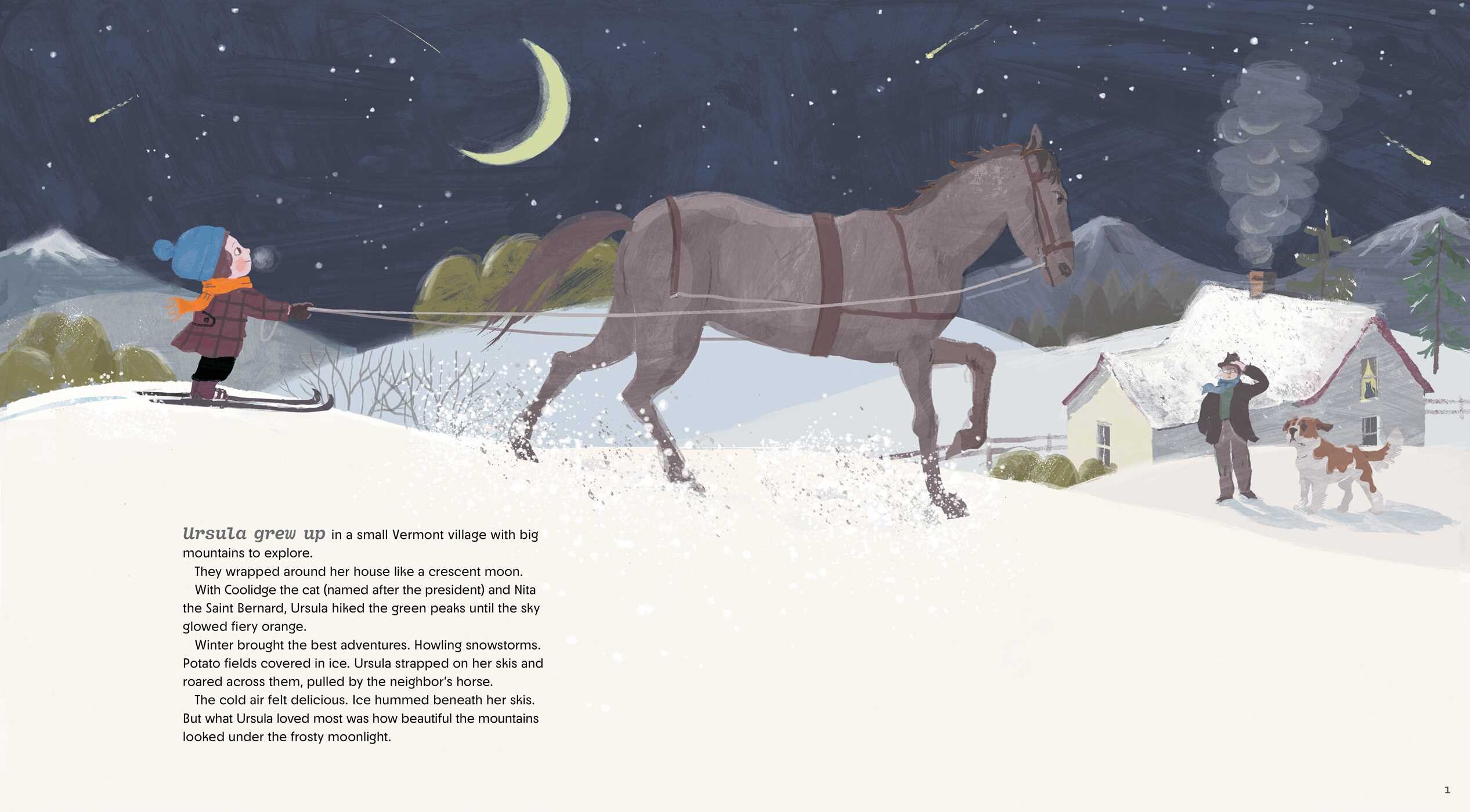
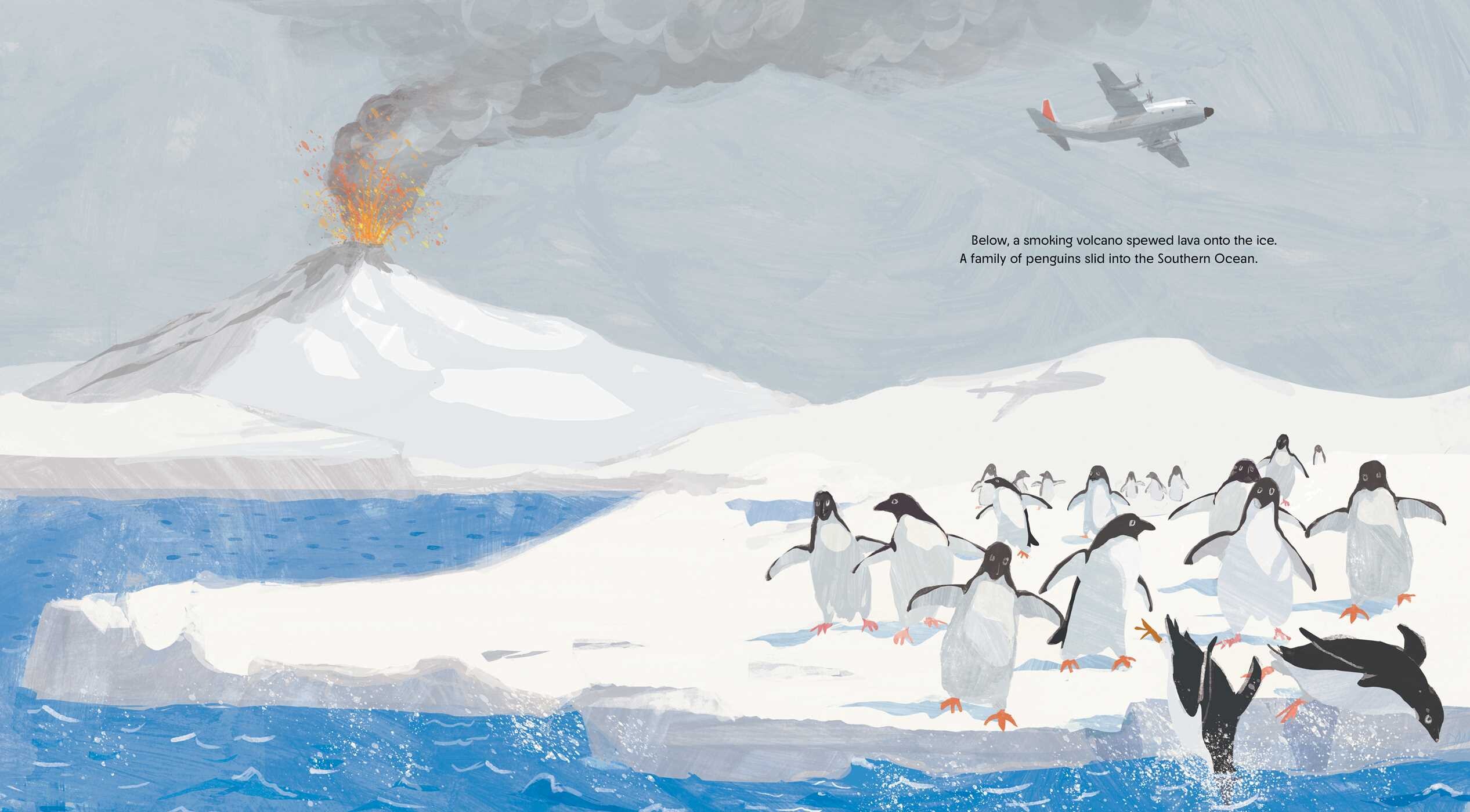
Ursula Marvin (1921-2018) was an intrepid adventurer from the start. A Vermonter by birth, she skied over icy potato fields and marveled at the moonlit mountains beyond, positive her future held something far more exciting than the humdrum tedium of scientific inquiry. But by the time she entered college, the field of planetary geology had captivated Marvin, and she was entranced by the information that rare earth minerals and moon rocks could communicate. Her curiosity about these other worlds brought Marvin to the ends of ours. Sharp, capable, and undeterred by the sexist stumbling blocks meant to thwart her, Marvin became the first female scientist to hunt the harsh landscape of Antarctica for meteorites, chasing the adventure she’d hungered for since childhood. But achievement at such scale is rarely won without adversity, and this feat was no different. Hampered by environmental challenges and plagued by self-doubt, Marvin nevertheless stayed the course, eventually becoming the preeminent expert on the first meteorite discovered on Earth and, ultimately, the much-deserving namesake of geological wonders earthside and beyond. Wallace’s text uses technical terms in context and renders the less glamorous labor that makes thrilling scientific discovery possible. Charming details peppered throughout add a personal texture to Marvin’s impressive figure. Carpenter delivers stunning visuals to match, her two-page spread capturing the glow of the midnight sun especially enchanting.
A luminous tribute befitting a brilliant trailblazer. (author’s note, excerpts from Marvin’s journals, facts about Antarctica, timeline, quote sources, bibliography, photos) (Picture-book biography. 8-12)
– Kirkus, STARRED REVIEW, 8/1/2025
“The stellar accomplishments of planetary geologist Ursula Marvin shine brilliantly in this exciting, lyrical, true story of adventure, science, and persistence. The story is stunning; the artwork is lovely; and the back matter alone reflects a great deal of worthy scholarship. A must-read for kids and adults alike.”
– —Sy Montgomery, National Book Award finalist, two-time Sibert Medalist, and New York Times bestselling author of science and nature books for all ages
“More than a delightful biography, Rock Star is an ode to curiosity and courage, discovery and exploration, wonder, passion, and defying naysayers. Young readers are bound to look up from these pages and declare, ‘I want to be a scientist!’”
– —Candace Fleming, Sibert Medalist and winner of the Los Angeles Times Book Prize for Young People’s Literature