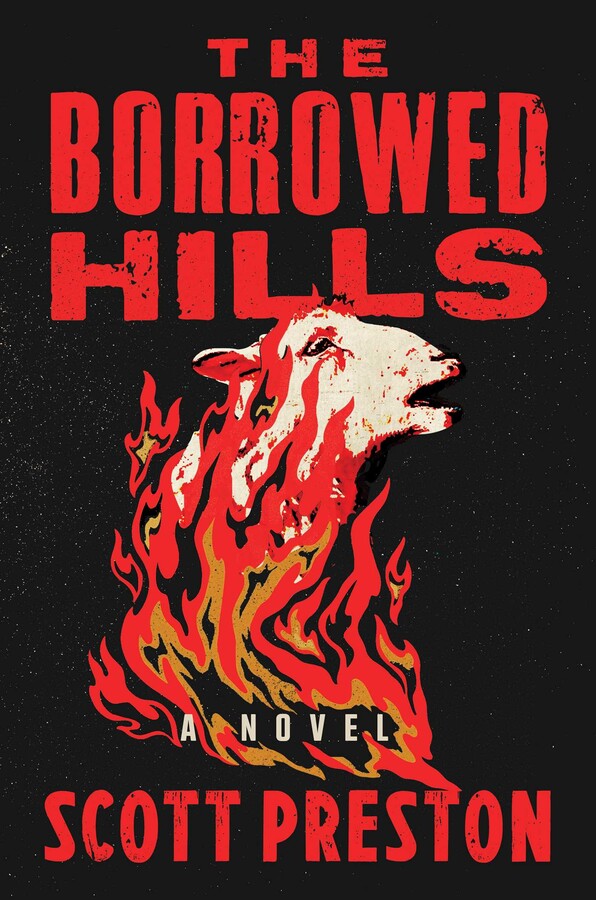
This reading group guide for The Borrowed Hills
includes an introduction, discussion questions, and ideas for enhancing your book club. The suggested questions are intended to help your reading group find new and interesting angles and topics for your discussion. We hope that these ideas will enrich your conversation and increase your enjoyment of the book.In early 2001, as foot and mouth disease breaks out across farms in northern England, two shepherds lose their flocks and decide to reverse their fortunes by stealing sheep from a rich farm in the south. So begins the dark and riveting tale of Steve Elliman and William Herne in Scott Preston’s debut novel. A lyrical crime thriller, a meditation on a dying landscape, and a reimagining of the American Western,
The Borrowed Hills is an insightful and gripping tale that celebrates the language and folklore of a forgotten England. With violent shootouts, tender love affairs, and a breathtaking heist alongside a luscious portrait of a mystical landscape, the novel raises the question: What are we leaving for the next generation, and what keeps us going in difficult times?
Reading Group Guide Consider the narrative point of view. How does this POV, which at times resembles a court testimony or an emotional end-of-life monologue, impact the emotional tenor of the book?
The foot and mouth disease wreaked havoc on the financial stability of farmers—many of them were instructed to slaughter healthy animals, thus contributing to their own financial ruin. Discuss the ethical issues of this policy. What routes were farmers left with once they slaughtered their animals?
Consider the relationships between Helen, William, and Steve. What draws each person to each other? What repels them?
When a young Steve is swimming with Helen in the mountain lake, he bursts into tears and both stifles and creates a moment of intimacy. What do you think was the source of Steve’s emotional outbreak? How would that moment, and thus Helen’s and Steve’s relationship, have changed if he hadn’t started crying?
The narrator notes that “everything special about the fells is in our heads” (page 239). Do you agree?
Steve subtly remarks on a sort of gentrification that has taken place in the fells, as the shifting landscape, where “families used to [actually] live” (page 240), is now riddled with empty homes not for sale and restaurants seemingly made for tourists. Discuss what has happened to the people of the fells. Where are the families? What do you think pushed them out?
Consider the title of the book and its context in the text: “I keep a mountain herd and leave them on those shelves of rock. On borrowed hills” (page 274). In that section, Steve remarks on his general lack of direction in life. How does this part shape your view of Steve? Why has he chosen to live “on borrowed hills” and not any land owned?
Why do you think Steve stayed, working on William’s land and joining in on his schemes, even when he wasn’t promised payment?
How does masculinity, in all its positive and negative manifestations, contribute to the characters’ successes and downfalls, their understanding of the world, and the choices they make? What do you make of Steve’s comment that “crying’s for when you want someone else [to get things done] for you” (page 197)?
While William plans to give the property to Danny, his son, Danny seems to grow increasingly distant and absent. Discuss what factors may have contributed to Danny’s absence.
Does your opinion of various characters change throughout the book? How, and at which points?
Revisit the heist scenes in the book. What went wrong with each one? What would have success looked like for the men?
Helen seems to have forsaken her own dreams and happiness for much of her life but eventually develops the strength to leave the fells and make a new start. What finally propels her to carve out her own path? How do you think she would have fared if she stayed?
How do the characters in the book seem to grapple with morality? How do you think their relationships to morality, to right and wrong, influence their decisions?
Enhance Your Book Club Research the instances of foot and mouth disease in Europe and throughout the world and the different policies enacted to deal with the epidemics. Discuss the social, political, and economic ramifications of the policies.
Consider one of these books, which capture the lives of working-class people with dignity and lyrical prose, for your next book club pick:
The Shepherd’s Life by James Rebanks,
American Rust by Philipp Meyer, or
Barkskins by Annie Proulx.
Visit the Lake District! Go to
https://www.lakelandretreats.com/lake-district-fells/ to plan your trip, or take a virtual trip at
https://virtualmountains.co.uk/LakeDistrict/LakeDistrict.html.