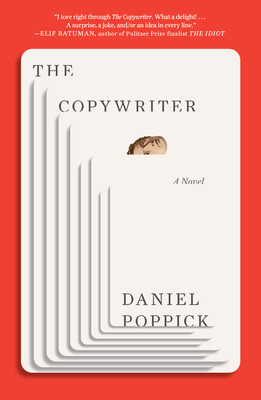
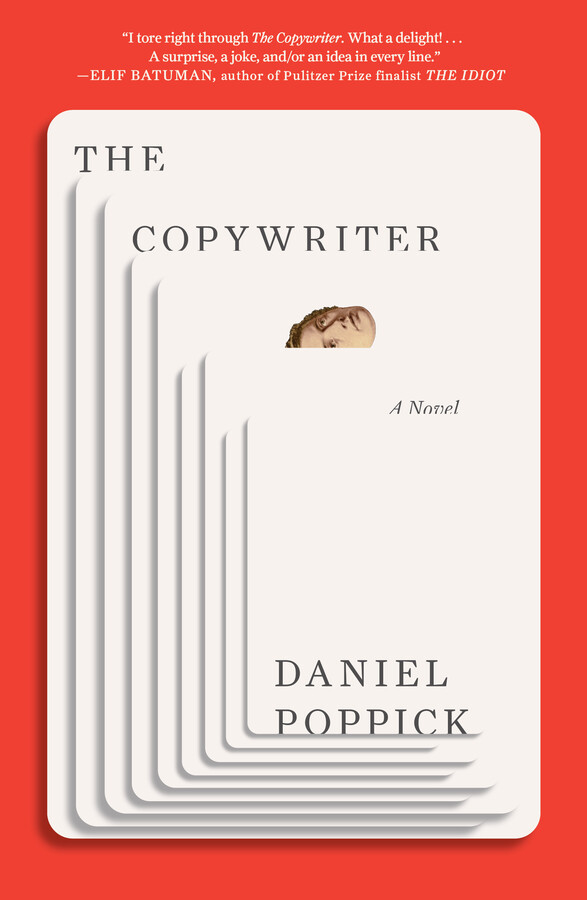
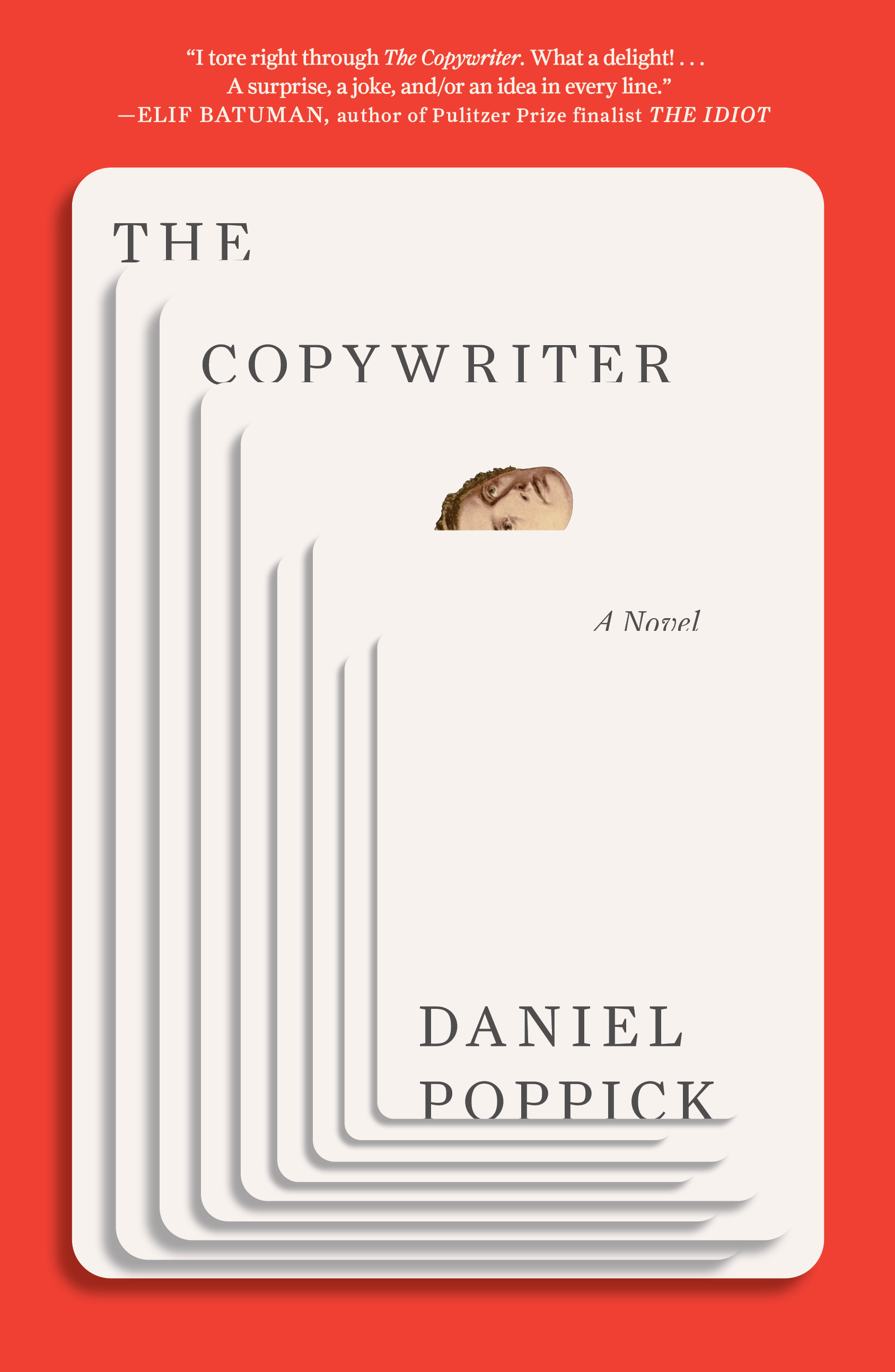
A “genuinely transcendent” (The New Yorker) portrait of the poet as an office worker, plumbing the depths of the spiritual gulf between art and work.
It’s the summer of 2017 and D__, a poet working by day as a copywriter at a retail start-up, can’t dispel a creeping sense of dissolution on the horizon. Whether it’s the company’s new twenty-four-year-old CEO, the growing distance between D__ and his longtime girlfriend, or a mounting sense of unreality in the wake of the first delirious months of the Trump administration, there’s a sense that things are speeding towards collapse—and that they’ve perhaps been unraveling for some time.
Borne along on these ambivalent straits, D__ begins to keep a notebook, filling it with everything: scenes from his own life, dreams, poetic fragments, stoned revelations, and broadly defined moments, both real and fictional, that he calls parables: attempts to learn from the underlying schedule of the universe, some music of the spheres that, if heard correctly, might help him finally tie together the disparate threads of his life, his poetry, and his labor. As the notebooks fill up over the course of two years, season by season, D__ circles a series of perennial questions about art and work, capturing in the process the unique absurdism of the gone-but-not-forgotten era of office culture between the Great Recession and the COVID-19 pandemic.
“Comic and profound, an intricate collage of a novel that plants itself in exhausted earth and, somehow, flourishes” (Kirkus, starred review), The Copywriter is a story following the absurd paths that office work can take us on and the subtle ways in which seemingly mindless labor can determine our fate.
Reading Group Guide
Join our mailing list! Simon ❤ Indies is full of valuable information for indie booksellers and buyers (both Children's and Adult), including:
This reading group guide for THE COPYWRITER includes an introduction, discussion questions, and ideas for enhancing your book club. The suggested questions are intended to help your reading group find new and interesting angles and topics for your discussion. We hope that these ideas will enrich your conversation and increase your enjoyment of the book.
INTRODUCTION
Everything has a schedule, if you can find out what it is.
It’s the summer of 2017 and, D__, a poet eking out a living as a copywriter for a start-up, notices a looming dissolution on the horizon. Whether it’s the impending layoffs at his company run by a clueless CEO, the unraveling of his relationship with his longtime girlfriend, or the way the country is staggering through the delirium of Trump’s first year in office, D__ senses that something is fraying, maybe has been for years.
So he begins a notebook: dreams, overheard conversations, emails, scenes from his life—scraps he calls parables. Maybe if he records everything, he’ll catch the hidden tempo, the schedule that undergirds his life, something that can untie art from labor, self from work.
In The Copywriter, two years unfurl in fragmented seasons under low-wattage florescence, exposing the same inescapable questions: How should an artist balance a job and a life when art doesn’t fit neatly into either category? Is it necessary to extract “meaning” from work that so often seems designed to parody the very concept of meaning? What concessions do we make for the sake of a paycheck? What does all of this do to our art, to our souls?
A comic examination of the spiritual gulf between art and labor, The Copywriter is a portrait of a poet in an open-plan office, asking what meaning, if any, can be found there.
QUESTIONS
The copywriter wanders the absurd corridors of contemporary employment, tracing how a trivial job can quietly colonize the spirit. In what ways does the protagonist resist, or attempt to resist, the engulfing of his art by his labor?
Consider the author’s note, which opens with the line: “I believe in the reality of absent things. If something isn’t here, it must be somewhere else” (page vii). How does this statement shape our understanding of the story’s fictionality? Do you interpret the note as belonging to Daniel Poppick himself or to the character D__? Why do you think the protagonist is referred to only as D__?
D__ laments the culture of corporate job-seeking: “I open LinkedIn, a website whose founders should face trial at the Hague” (page 99). In what ways does the LinkedIn-era of self-marketing, with its emphasis on self-promotion and reduction of talent to marketable assets, bleed into the art or “real” worlds? How does the pressure to package and market oneself—as if writing classified ads for the self—distort art and personal identity?
Consider the opening line of the June 2017 notebook: “The wind erases a line in the sand” (page 3). What does this line and image suggest about the nature of time or other forces and their capacity to reshape or swallow up previously held beliefs or positions? Discuss how this metaphor might be applied to questions of “selling out,” conformity, or resistance. How might the line highlight the malleability or impermanence of one’s stances or beliefs?
D__ maintains a close-knit group of friends, bonded by their shared love of poetry despite the different life paths they embark on. What sustains their friendship, and what does the novel say about the role of friendship throughout adulthood? Discuss the importance of friendship--how do relationships evolve over time, and in what ways have your own friendships endured or shifted?
The novel frames millennials’ angst and their protracted adolescence as tied to the effects of the Great Recession. When D__ observes that “Adults of my generation—traumatized by the disastrous economy that awaited us when we graduated college—are in a lifelong process of self-infantilization” (page 21), what specific behaviors, attitudes toward adulthood, and labor or relational dynamics seem shaped by the economic crisis? Or might these attitudes, behaviors, and relationships instead be symptomatic of some other cultural influence that has contributed to existential anxieties observable among millennials? To what extent are similar tendencies observable among members of Gen Z?
The novel is a narrative that takes on many forms: a love story, a breakup story, a road-trip novel, a diary, a collage—a nesting-doll novel about art and storytelling—to oneself, to others. Discuss the various forms that The Copywriter took for you during your reading experience. In what ways does the novel’s shape-shifting design bolster its themes of self-inquiry, revelation, and the conundrums inherent to art-making and laboring?
The line “No art, no melody, no time that is not bound up in some dark labor” (page 24) offers a view of art and time that is inseparable from exploitation and commodification of the self. Do you agree that all art is or will inevitably become complicit in “dark labor,” or can art exist as a space of freedom and resistance against it? Have members of your group pick a side and defend their positions.
Eliza seems to have opted out of the rat race that D__ and his friends, to varying extents, are all still running. What do you make of her character? Discuss your theories on why she decided to live as an off-the-grid recluse in the woods. Why do you think she continues writing, and scrapping, a novel that no one else might ever see?
Discuss the role of power in the novel. Who is powerless and who wields power? How is power exercised, and what are the moral or psychic consequences for those who have the authority to subjugate others? How do they reconcile (or fail to reconcile) their actions with their conscience?
Examine the dissolution of Lucy and D__’s seven-year relationship. What specific tensions or moments in the text signal towards the unraveling of their relationship? To what extent does D__’s lack of ambition or professional success contribute to the breakup, and does the novel suggest that greater achievement would have secured the relationship? Or were there deeper emotional or personal fractures that made their separation inevitable?
The protagonist takes a moral objection to his assigned task of writing an event description for a lecture by a prominent former US statesman who is “widely despised all over the world for the bloodshed and destruction resulting from his policies” (page 196). He refuses, demonstrating an insistence on personal integrity over complicity as he draws “a line in the sand” (page 206). His refusal exposes the precariousness of dissent under capitalism, where survival is bound to labor and obedience to authority. Discuss with your group the effects of standing up for what you believe in, even if you endanger your career mobility, security, and overall livelihood. What are the benefits of doing this? Is it ever possible to fully resist without sacrificing one’s livelihood—and if so, at what cost?
ENHANCE YOUR BOOK CLUB
Keep your own “copywriter’s notebook”! Record the parables, overhead lines, and dreams of your own life.
Select one of the books quoted in the epigraph, George Eliot’s Middlemarch or the sixth installment in Marcel Proust’s In Search of Lost Time series, The Fugitive, for your next book club pick! Discuss with your group how The Copywriter resembles these works’ meditations on the balancing of individual desires with societal expectations, the art of introspection, and search for some essential truth.
Cast a film or television series adaptation of The Copywriter! Who would you cast in the role of D__, Lucy, the twenty-four-year-old CEO, Ruth, Will, the parents, and other roles?
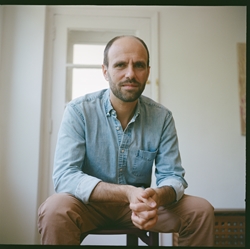
Daniel Poppick is the author of the poetry collections Fear of Description, a winner of the National Poetry Series, and The Police. His writing appears in TheNew Yorker, The Paris Review, The New Republic, The Yale Review, BOMB, and elsewhere. He lives in Brooklyn.
"Tune[s] in to the metaphysical dimension of everyday suffering, articulating it with a metrical precision...One of The Copywriter's most moving aspects is its expansive definition of poetry, which admits bureaucratese and launch-party banter and could theoretically apply to any part of life...genuinely transcendent...Poppick's point isn't that everything matters, it's that anything might." —Katy Waldman, The New Yorker
"Genre-wise, The Copywriter exists somewhere between a hangout film and a novel of ideas… By placing the fraught macro alongside the absurd micro, Poppick stages an argument about how our political and personal consciousnesses inform each other, and about the emotional whiplash of modern life." —Jonathan Russell Clark, The New York Times
"Very funny...There is a Seinfeldian quality to the novel, in its close attention to the small indignities and inconsistencies of daily life. …Poppick’s writing is nutritious, dense with ideas and references and questions." —Lora Kelley, Kismet Magazine
"By reclaiming language from its day job and returning it to the realm of poetry, D__ does more than just survive; he stages a quiet, persistent revolution." —Brock Kingsley, Chicago Review of Books
"Clear and funny, wryly cynical without indulging in nihilism...runs the gamut from insouciance to elegance...Comic and profound, an intricate collage of a novel that plants itself in exhausted earth and, somehow, flourishes." —Kirkus Reviews (starred review)
"Caustic and insightful about the pointlessness of contemporary labor, Poppick offers moments of profound comedy and wonderful turns of phrase throughout. A fascinating perspective on a specific period of recent history, this is a meditative and beautifully written debut." —Booklist
"Executed with the precision and perception of a poet... Utilizing an epistolary style, unfurling as a series of notebook entries, which include straightforward storytelling, poems, pithy observations, and black humor, the narrative is built upon two of the poet’s greatest strengths: economy and a rapt attention for the seemingly insignificant." —Library Journal
"Reflective...funny…This portrait of a modern-day Bartleby is a blast." —Publishers Weekly
"Some of my favorite novelists are actually poets, and this now includes Daniel Poppick, who has written a stimulating and deeply pleasurable book that made me feel homesick for being a young person in New York and talking about literature with my friends, and also, weirdly, hopeful for the future. It takes the form of a set of notebooks, starting in the summer of 2017, into which a poet called D__, who daylights as a copywriter, dumps his observations, some scraps of poetry, various stories from his life, and his dreams, all with a highbrow sensibility and a winking sense of humor...A little bit Renata Adler, a little bit Ben Lerner...a little bit Maggie Nelson." —Emily Temple, LitHub
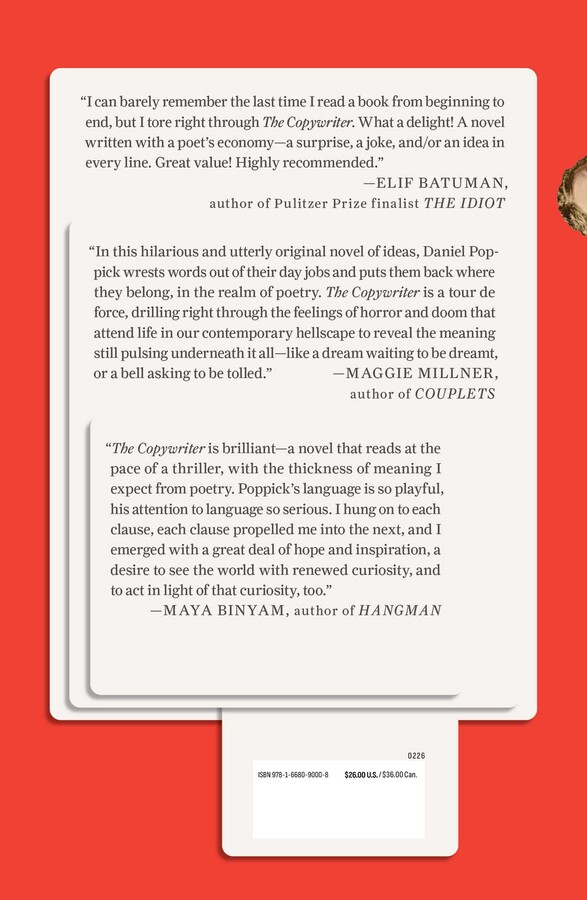
"I can barely remember the last time I read a book from beginning to end, but I tore right through The Copywriter. What a delight! A novel written with a poet’s economy—a surprise, a joke, and/or an Idea in every line. Great value! Highly recommended." —Elif Batuman, author of Pulitzer Prize finalist The Idiot
"In this hilarious and utterly original novel of ideas, Daniel Poppick wrests words out of their day jobs and puts them back where they belong, in the realm of poetry. The Copywriter is a tour de force, drilling right through the feelings of horror and doom that attend life in our contemporary hellscape to reveal the meaning still pulsing underneath it all—like a dream waiting to be dreamt, or a bell asking to be tolled." —Maggie Millner, author of Couplets
"The Copywriter is brilliant—a novel that reads at the pace of the thriller, with the thickness of meaning I expect from poetry. Its protagonist is a writer who is paid to make words feel dead, but who knows—even in the midst of the churning monotony of his task—that they will always find a way to live. Poppick's language is so playful, his attention to language so serious. I hung onto each clause, each clause propelled me into the next, and I emerged with a great deal of hope and inspiration, a desire to see the world with renewed curiosity, and to act in light of that curiosity, too." —Maya Binyam, author of Hangman