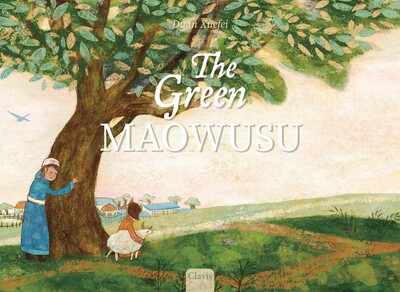
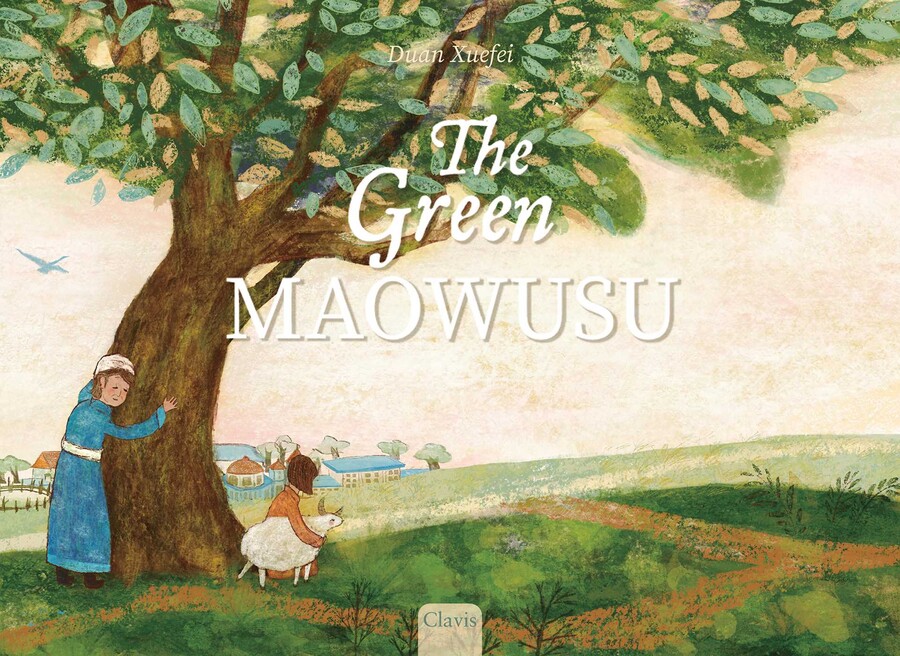
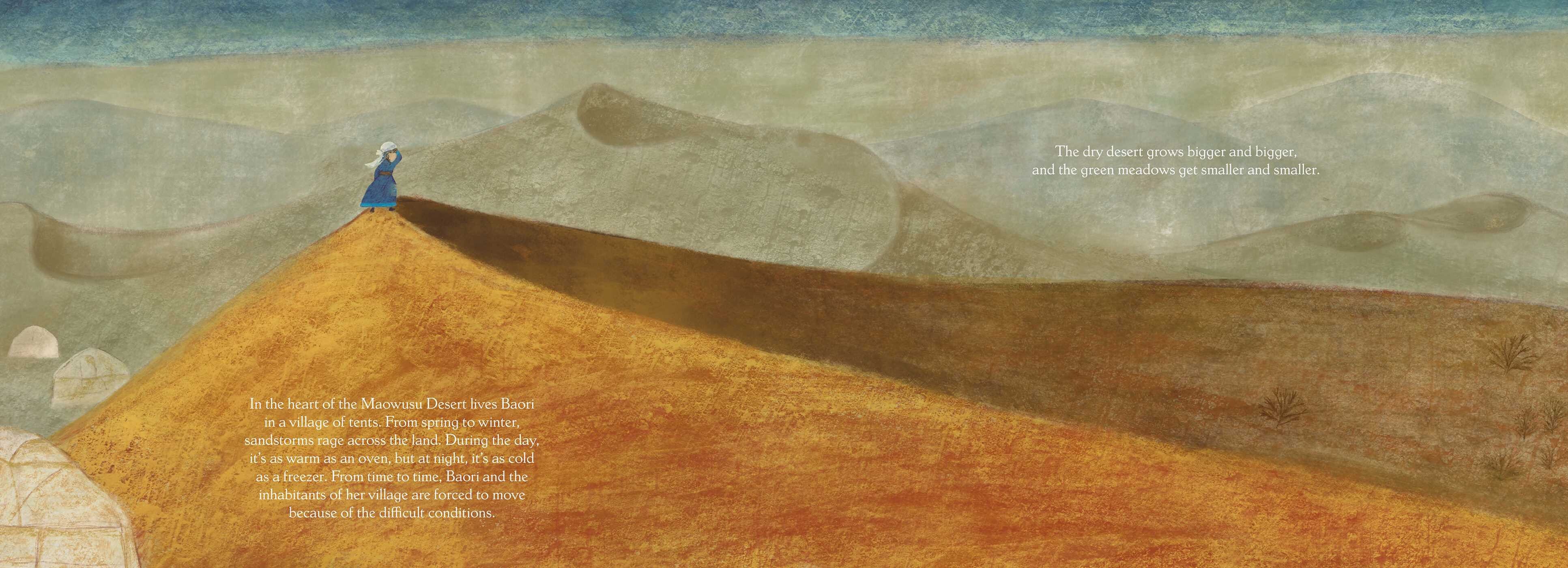
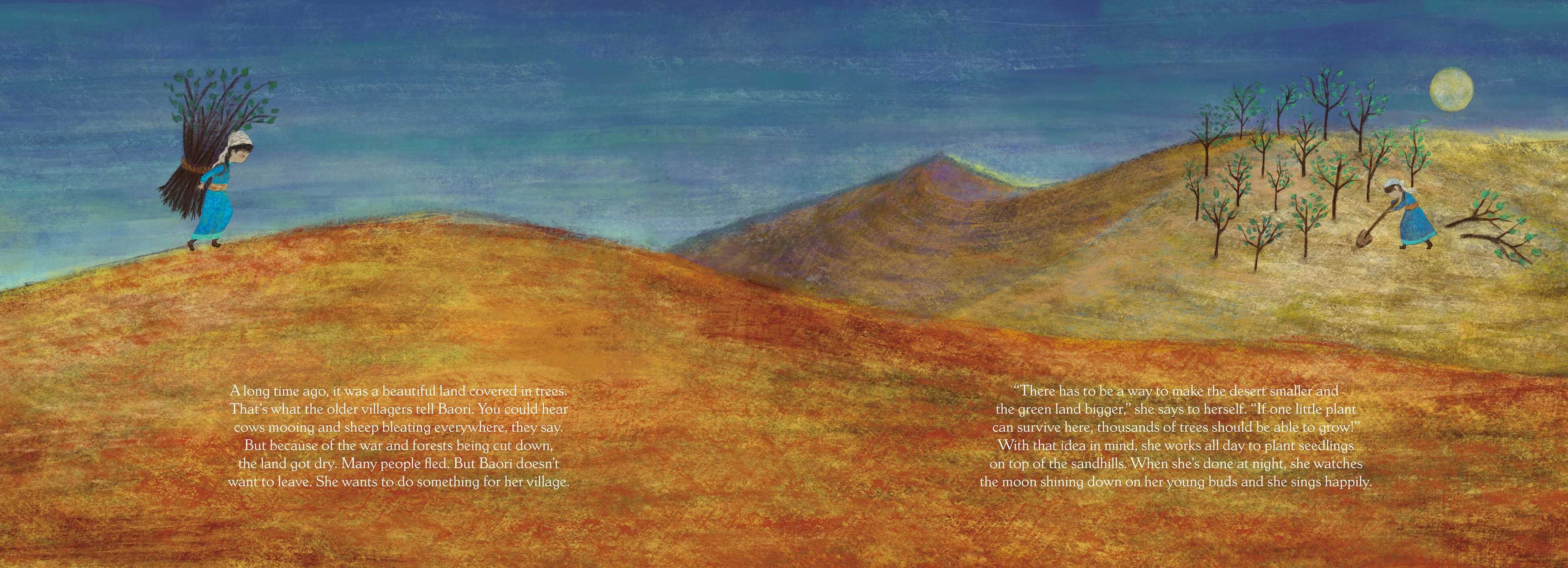
A remarkably tenacious girl inspires and incites her fellow villagers to turn their desert home into a fertile oasis. Baori lives in a tent village in northwestern China’s Maowusu Desert (the word means “bad water” in Mongolian). Difficult conditions—sandstorms, extreme temperatures, drought—force the other villagers to move as “the dry desert grows bigger and bigger, and the green meadows get smaller and smaller.” Long ago, the elders tell Baori, their land had been beautiful, “but because of the war and forests being cut down, the land got dry. Many people fled.” Baori intends to stay and “make the desert smaller and the green land bigger.” Sadly, the seedlings she plants blow away, sheep eat up the young plants, and sandstorms subsume new trees. But a single tree still standing offers enough hope to keep trying, especially when “everyone helps.” Baori and her community continue their efforts through the years: “Baori grows older and older, while the desert…gets younger and younger and greener and greener.” Golds, browns, and verdant greens dominate Duan’s palette, with spreads that bleed beyond the edges, mirroring the desert’s vastness; characters are garbed in flowing Mongolian traditional dress and headwear. Originally published in Belgium and the Netherlands and translated from Dutch, this is a radiant glimpse at environmental history—Maowusu is real, its transformation successfully ongoing—into a heartwarming, heroic tale of unwavering persistence. One girl, one tree, one village changed their world. A powerful lesson in the rewards of nurturing nature together.
– Kirkus Reviews
In the harsh Maowusu Desert in northern China, a young girl named Baori dreams of living in a green land where plants will grow. Loosely following the real-life efforts of environmentalist Yin Yuzhen, this inspirational story about persistence and imagination follows the fictional Baori’s attempts to grow trees in the desert.
At first, the task seems impossible as Baori encounters problem after problem. Her seedlings are blown away, eaten by sheep, scorched by the Sun, and dried up by drought. However, Baori recognizes the importance of research and reflection and improves her planting process each time. Finally, she and her fellow villagers work together to create an environment suitable for growing trees, and the process of desertification is reversed.
While some children may not clearly see how this book connects with science, the story introduces plants as a subject to study and observe. Even in challenging conditions, readers learn, it is possible to help plants grow if you keep trying and think carefully.
On a higher level, author Xuefei Duan interweaves aspects of the scientific method, including consulting expert sources and learning from failure, into a story about teamwork, tenacity, and problem-solving. The tale also reflects on more emotional themes: the transformation from frustration to happiness when efforts are finally rewarded, and the sensations of renewal, aging, and change. The book’s human story combines well with its scientific message to help readers understand how ecological restoration can have environmental and social benefits.
One might imagine that illustrations of a desert would be dull and muted, but the reader’s eyes are drawn in by the villagers’ bright and colorful clothes and the gradual greening of the landscape. The book’s soft-edged drawings provide a windswept look, complementing the depiction of a sweeping and expansive desert. The Green Maowusu is suitable for children around 5 to 8 years old, with some explanation required for younger kids.
– Madeleine Seale, Science Magazine
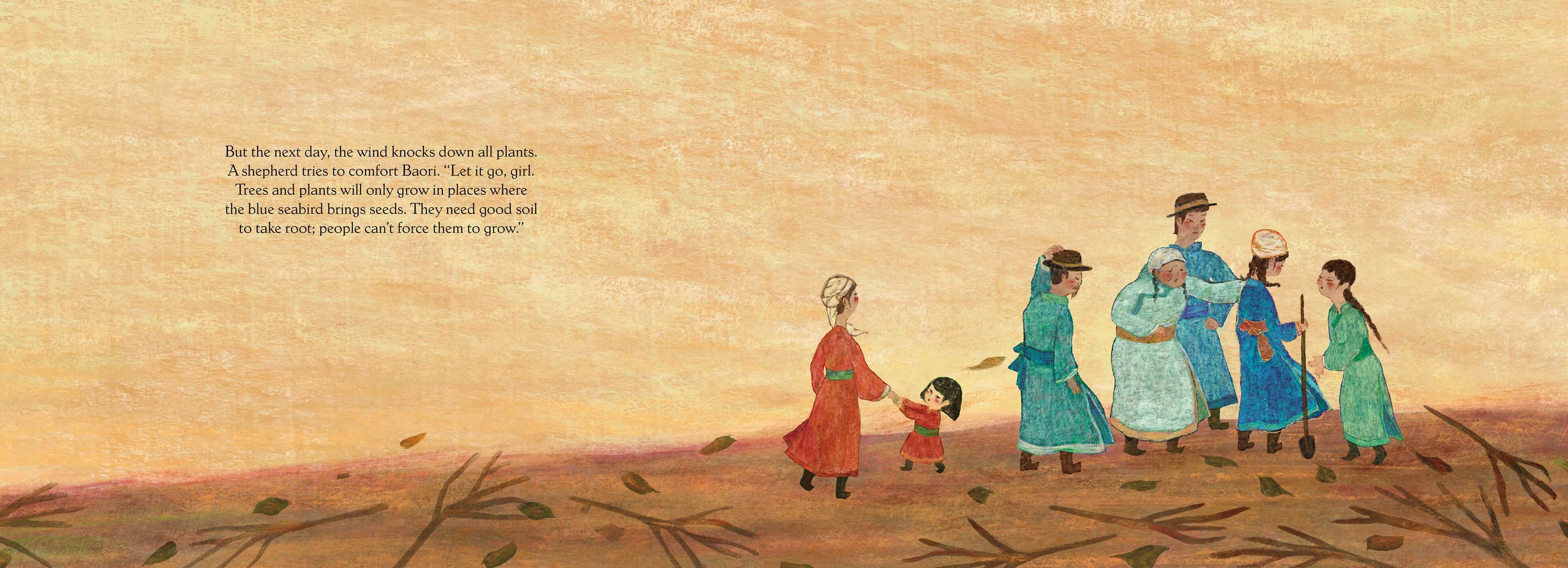
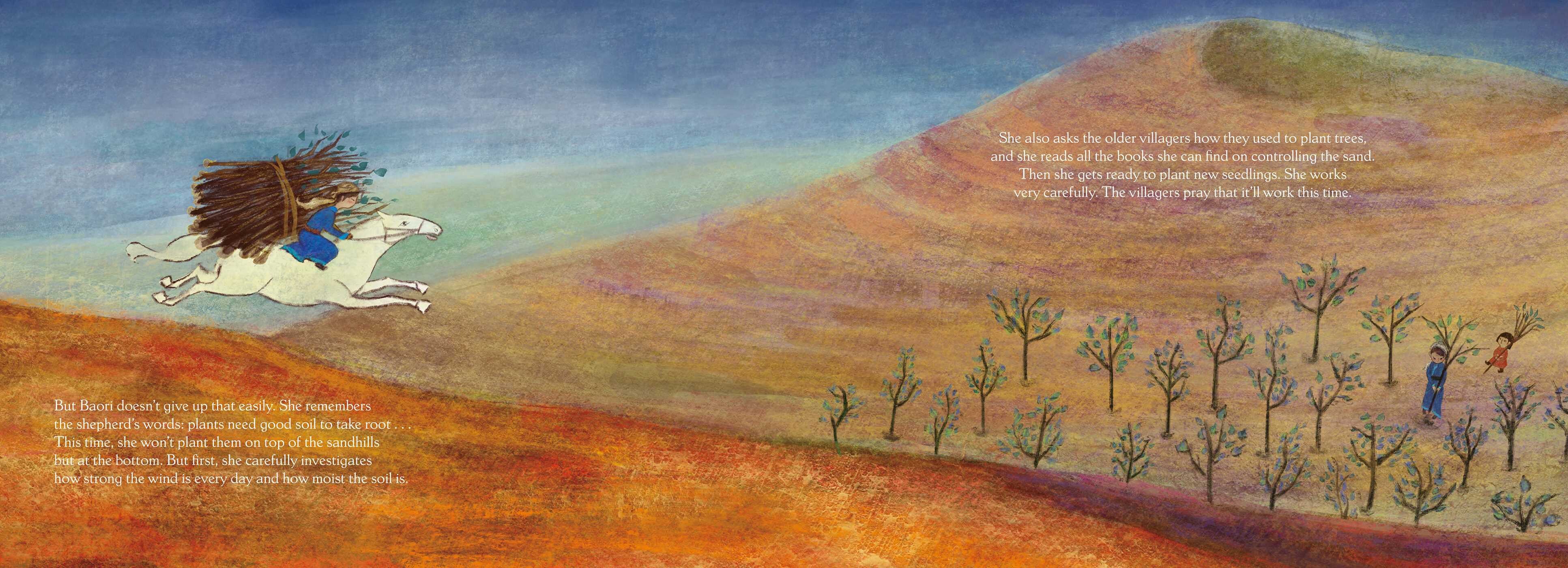
Baori lives in the Maowusu, a desert in Inner Mongolia in northern China. War and weather have been hard on the area. As trees were cut down and not replaced, the process of desertification—in which sand takes over arable land—has left many people without the resources necessary for their daily lives. Baori is determined to improve the land. She plants seedlings, hoping they will preserve the soil, but the wind knocks them down. She tries again in a more protected location. This time sheep cause destruction. Baori asks other villagers for help, and working together they fence in the plants. Through a sandstorm and drought, Baori and the others fight to keep the plants alive, tackling each new problem with ingenuity and patience. This inspiring environmental story, based on true events, shows how ordinary people can have a significant impact on their surroundings through perseverance. Full-bleed paintings capture the colors of the changing landscapes, dramatically portraying the vast hills of sand, the multiple planting attempts, and eventually a successful village nestled on green, rolling land.
– Lucinda Whitehurst, Booklist