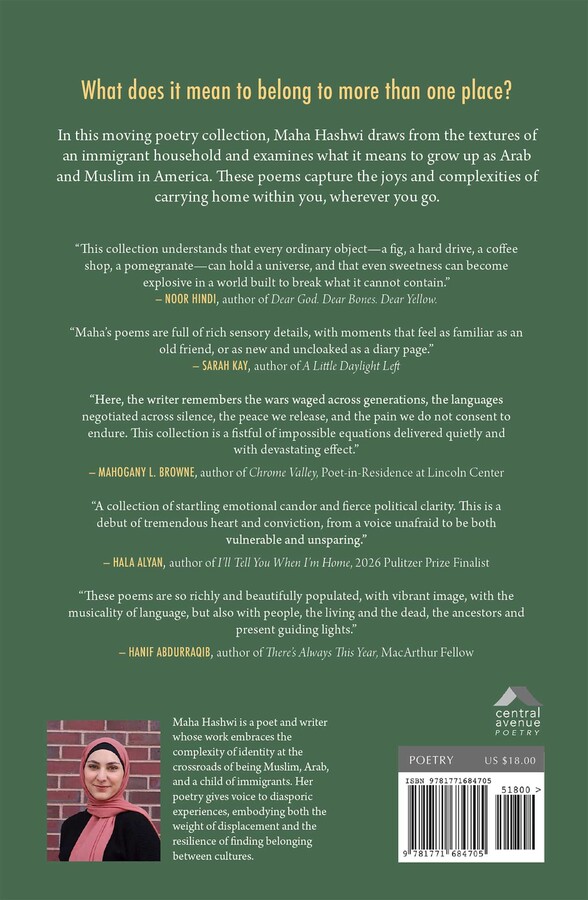
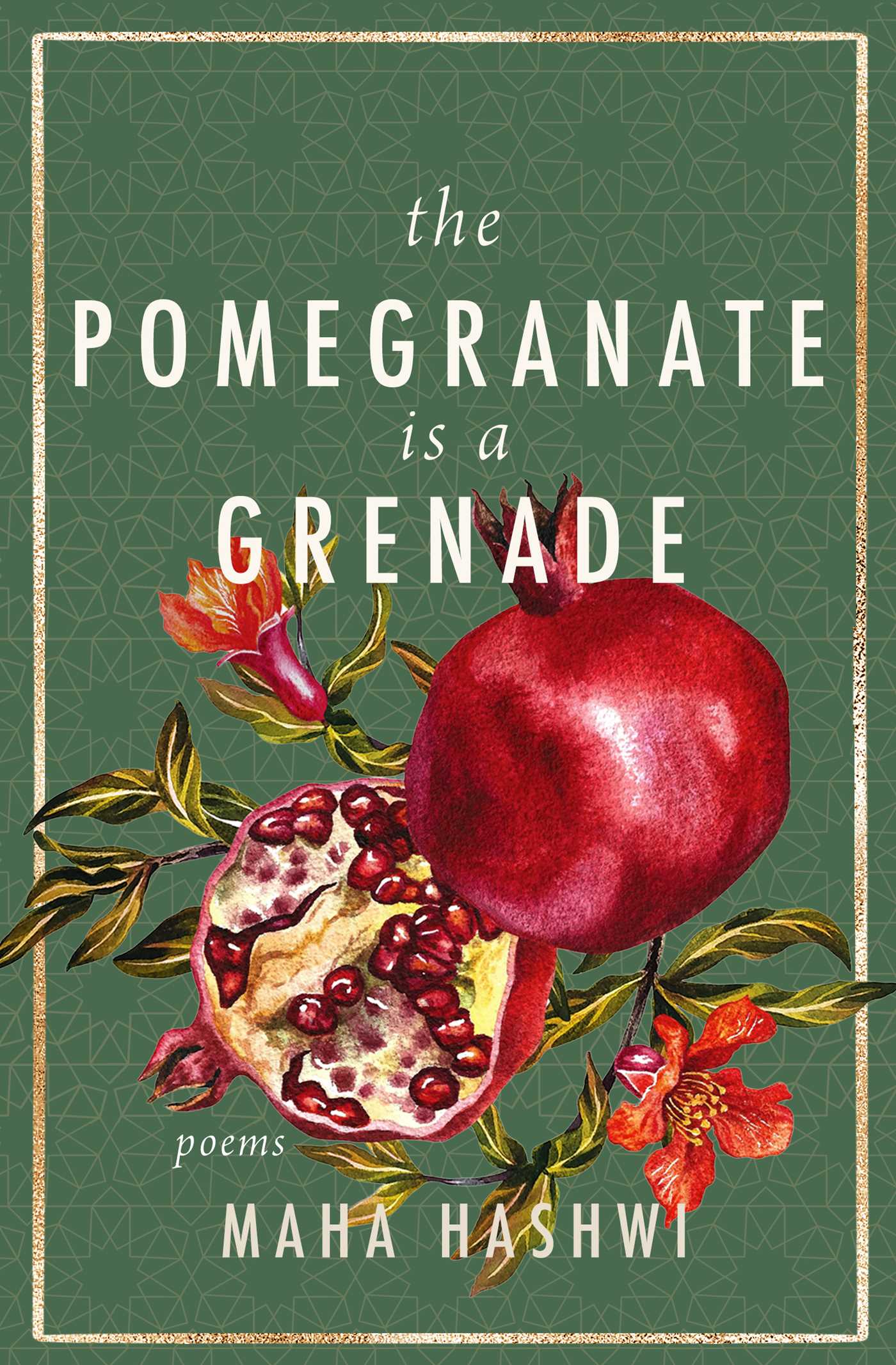
“These poems are so richly and beautifully populated, with vibrant image, with the musicality of language, but also with people, the living and the dead, the ancestors and present guiding lights. Within this book, there is not a single universe, there are several, each of them honored by the precision and heart that is present in the craft. What a gift.” — Hanif Abdurraqib, author of There's Always This Year
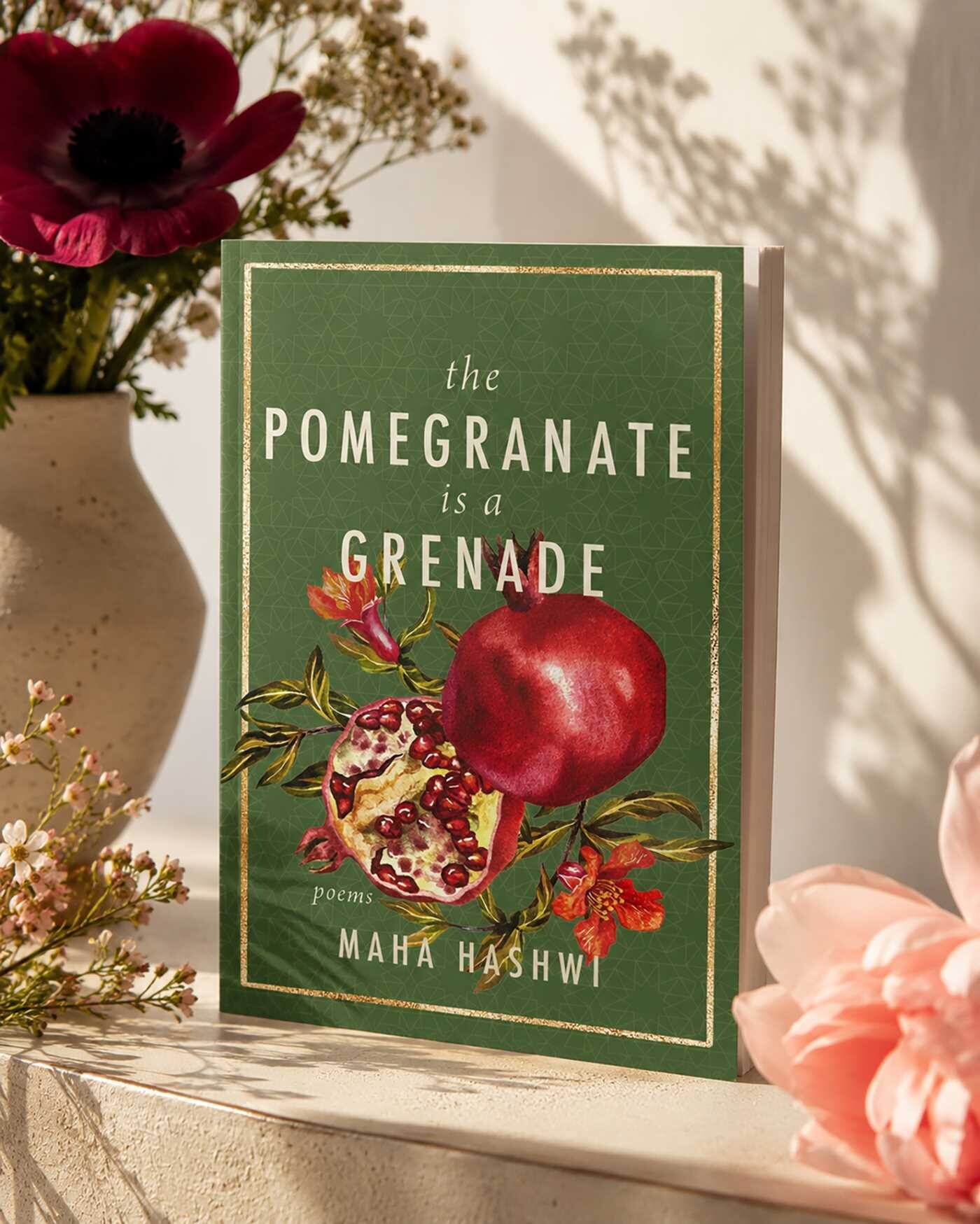
“In The Pomegranate Is a Grenade, Maha Hashwi writes with tenderness, wit and devastating clarity about what it means to come of age between worlds: the mosque and the internet, family and selfhood, homeland and city, love and grief, memory and survival. This collection understands that every ordinary object—a fig, a hard drive, a coffee shop, a pomegranate—can hold a universe, and that even sweetness can become explosive in a world built to break what it cannot contain.” — Noor Hindi, author of Dear God. Dear Bones. Dear Yellow
“Maha Hashwi’s The Pomegranate Is a Grenade is a collection of startling emotional candor and fierce political clarity. These poems understand displacement not as a single event but as a lifelong condition: linguistic, geographic, romantic, spiritual. These poems understand displacement not as a single event but as a lifelong condition: linguistic, geographic, romantic, spiritual. Hashwi can be disarmingly tender and spiritually intimate, but also sharply incisive in the next breath, confronting Islamophobia and inherited trauma with startling force. This is a debut of tremendous heart and conviction, from a voice unafraid to be both vulnerable and unsparing.” — Hala Alyan, author of I’ll Tell You When I’m Home, 2026 Pulitzer Prize Finalist
“Reading Maha's poems feels like being invited into a warm living room and offered a seat on a comfy sofa. The poems in this collection are full of rich sensory details, with moments that feel as familiar as an old friend, or as new and uncloaked as a diary page.” — Sarah Kay, author of A Little Daylight Left
“The writer remembers the wars waged across generations, the languages negotiated across silence, the peace we release, and the pain we do not consent to endure. Together, these poems be a portrait of inheritance and displacement, revealing the impact of carrying a war in your body, while learning how to transmute a scream into witnessing.” — Mahogany L. Browne, poet-in residence at Lincoln Center, author of Chrome Valley