Session 1
Grounding
The nation is shattered
mountains and rivers remain.
~ Du Fu, “Spring View”
On this July day swallows swoop past, their aerial acrobatics accompanied by the percussion of woodpeckers. A deer and two fawns bound down the steep hill below my window. The air is light and soft. It is early morning, a time of liminality when the veil between worlds is thin. In these moments I am most connected to my creativity and to the wildness around me.
The long months of Covid were a time when the human world grew still. With fewer cars on the roads and planes in the sky, with less activity and motion, busyness and noise receded and nature came to the fore. You could hear the rustle of leaves and the quail in the underbrush. You could glimpse coyote pups playing in the meadows or scent the fragrance of rain in the cleaner air. Even in the city, the dawn chorus sang loud and true. The world we had effectively kept at bay through our constant activity found us again.
This book found me and was seeded during this strange time. More than ever, I wanted to guide people to take note of these rare encounters, to train themselves to experience the natural world as it burst into living color. And then to carry that awareness on, as and when we emerged from our Covid cocoon.
The Wild Scribe is for all those who want to explore their connection to nature or who want to better express their feelings for nature through writing. It’s for those who love to hike and write and to explore new trails, both with their feet and with their imaginations. It is for those who care passionately about Earth and fear for her (and our) future. It’s for those who know in their hearts that our connection to nature is key to shifting our consciousness to support a living, thriving planet. And it’s a resource for forest bathing guides, eco-therapists and eco-coaches, and teachers of journal or nature writing and poetry.
Keeping a nature journal is an age-old tradition particularly popular with the Victorians, who catalogued plants and animals with scientific precision. They added enormously to our knowledge of the natural world, and we owe them a debt of gratitude. But we live in different times.
It is not enough to observe nature, as vitally important as that remains; we need to pay attention to our kinship to nature and our relationship to the living world. We are not separate from nature, merely observing it at a distance; we are a subjective part of nature, writing about the community to which we belong and are integral. Simply put, we are an aspect of nature, writing about the natural world in which we have our part to play.
The effects of human activity on Earth’s systems are increasingly apparent. As the climate heats up and rivers dry up, as we confront a growing litany of alarming human-made disasters, it is urgent that we come back into deep and sacred communion with nature. Keeping a nature journal can help us in this vital work.
During Covid we were reminded that we live on a planet that still offers us pockets of wildness. Pigeons soared above our rooftops. Falling leaves marked the seasons, even as time was turned on its head. During the long, painful months of isolation, nature became a lifeline for many, a source of sanity essential to enduring grief, fear, and loneliness.
With retreat centers closed and travel grounded, I took my nature-writing class, “The Wild Scribe,” online. I’d taught the workshop in person for years, and now people from different corners of the world gathered on Zoom, hungry for community, creativity, and the encouragement to explore one of the few embodied relationships that remained open to them during lockdown: our relationship with place.
While lockdown prevented many of us from seeing our families, hanging out with our friends, even attending the hospital beds or funerals of loved ones, there was another energy and relationship crying out for attention. Whether carried on the wind or the swoosh of raven wings, we heard nature whispering to us: I am here, all around you. I have always been here. Are you ready to find out what we mean to each other?
The participants in my course coped with many different circumstances. Some were stuck in small apartments in crowded cities; others walked the streets outside their suburban homes or were free to tromp through the countryside. Whether nestled in the Berkshires or among the sheep-dappled hills of the Cotswolds, towered over by the mountains of Switzerland or the skyscrapers of New York, or trudging the rainy streets of Bristol, they longed to connect with and explore the living world. This was a profound freedom in the face of so many restrictions and stresses.
I’ve structured this book on that 10-month nature-writing course, which was offered through the UK’s Hawkwood Centre for Future Thinking amid the pandemic. Each chapter explores a different aspect or quality of nature. Some focus on seasons, others on how we approach nature, still others on the emotions evoked by an animal, plant, or landscape. In turns playful and provocative, the writing prompts are designed to unearth spontaneous and surprising responses. If there’s one rule to this book, it is this: Wander. Follow your energy; dive into any assignments that capture your attention, in any order you like. As a forager of inspiration, you are tasked with picking the fruit that looks juiciest to you in the moment.
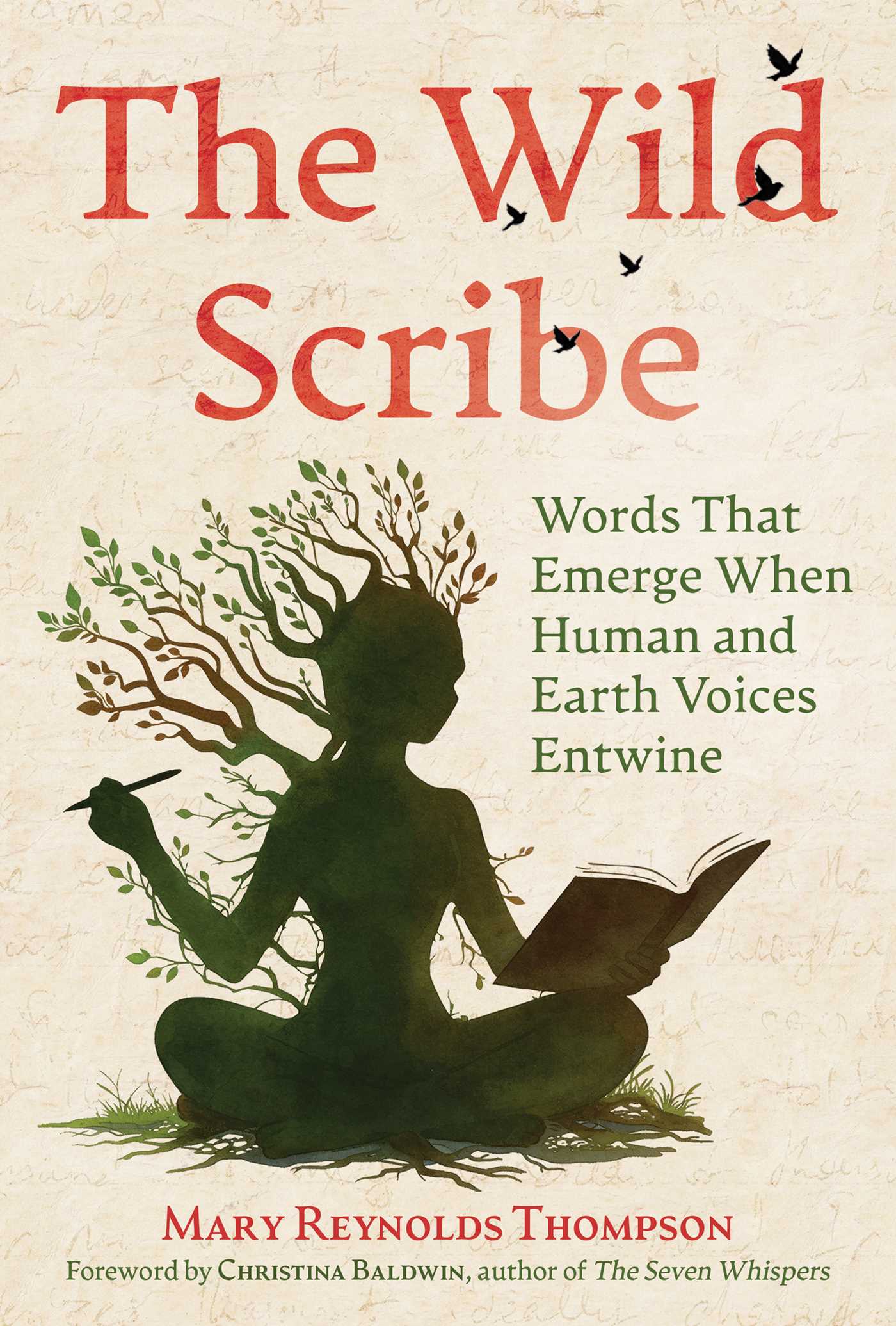
A Wild Scribe is not just a recorder of nature. We seek fresh language that forgoes mere observation of the natural world to embed us more deeply within it. I call this “wild language,” and it is about the magic that happens when the voice of nature commingles with our own. As you navigate this book, you will discover what it is to communicate from a rooted place, filled with wonder for the living, breathing world in which you are enfolded. Journaling in nature, you will journey into and discover your own inner wild.
As a facilitator of both poetry and journal therapy, I encourage you to respond to my prompts in either verse or prose. Feel free to switch back and forth—each one is powerful in how it connects you with nature, both inner and outer. And you don’t have to be an expert in either form. In fact, right now, throw out the rules of syntax and perfect grammar, especially if the need to be perfect holds you back.
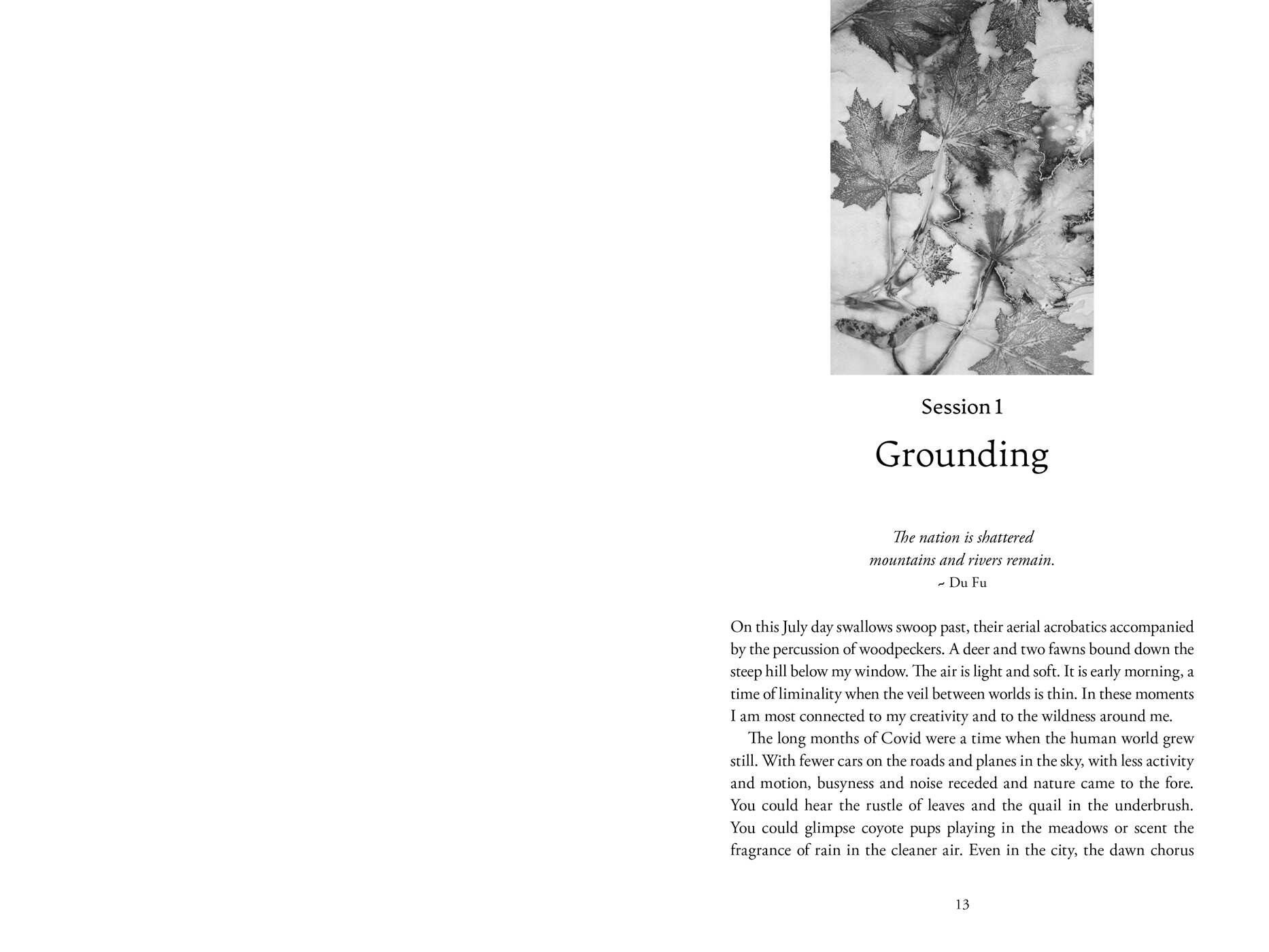
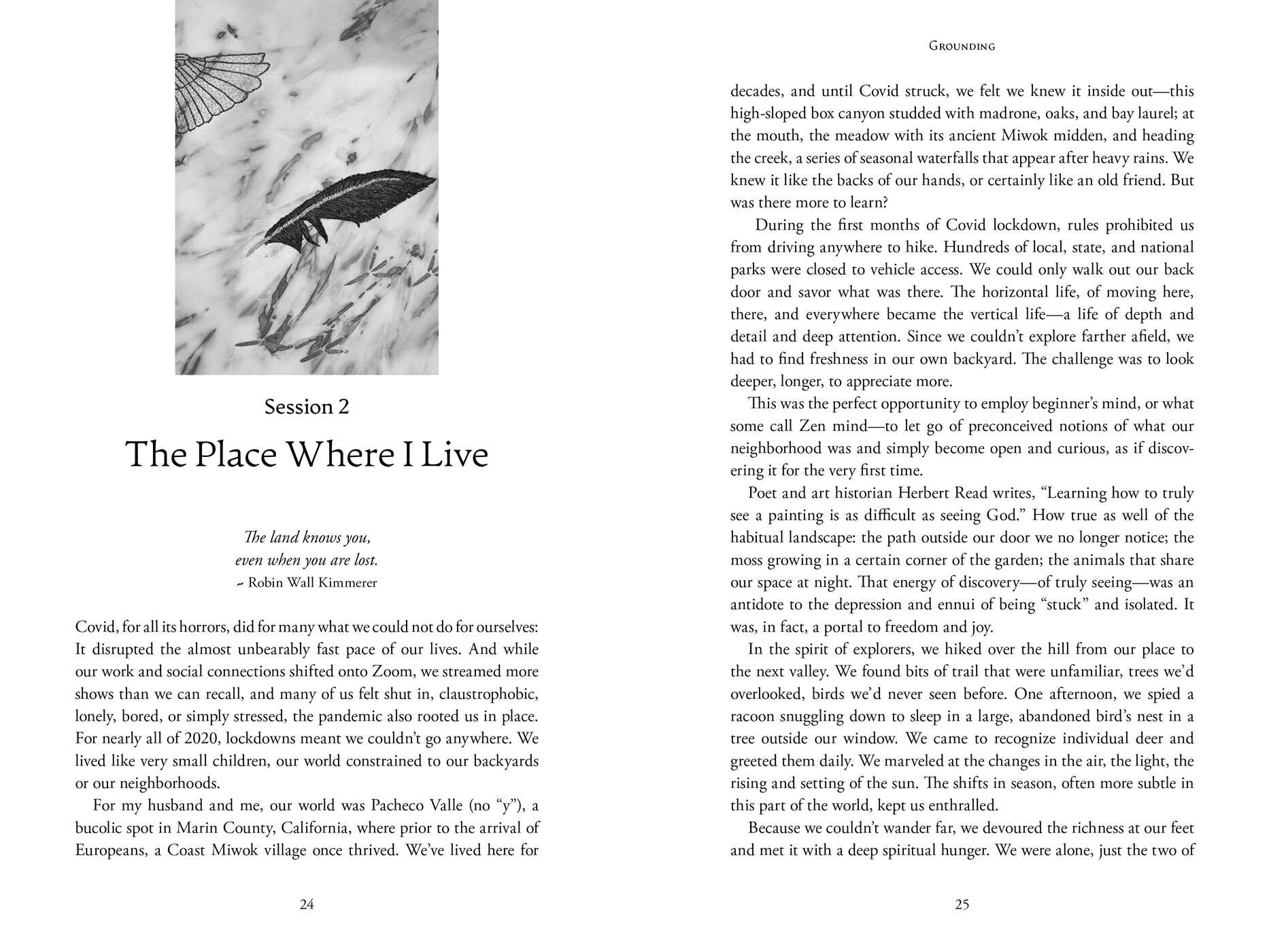
A Wild Scribe cultivates authenticity and spontaneity. Throughout, I’ll be sharing writing by students to inspire varied ways you might approach the journal invitations. To keep these contributions true to their original voice, you’ll notice a mix of American and English spelling in these extracts. The extraordinary illustrations by Jo Smith, all created using natural dyes, are further invitations into enchantment.
There are many books on nature journaling. My bookshelves hold quite a few of them. But this book is different. My focus is on the connection between inner and outer nature, and the dissolution of the false divide between the two. This is nature journaling with a purpose: to have you become more of your authentic, wild, unbridled self—and in doing so, to live in a way that ends separation and integrates you into a whole being with nature.
Language and landscape are both filled with hidden treasures. These new approaches to writing will lead to fresh discoveries. Be adventurous as well as devoted. As often as you can, read aloud your entries in some wild place, to the trees, plants, and living creatures. Sense how they respond.
Remember that wild language is embodied, natural, authentic. Don’t try to write like someone else—a fern would never attempt to sing like a finch. Be yourself while also opening to the natural poetry of the world.