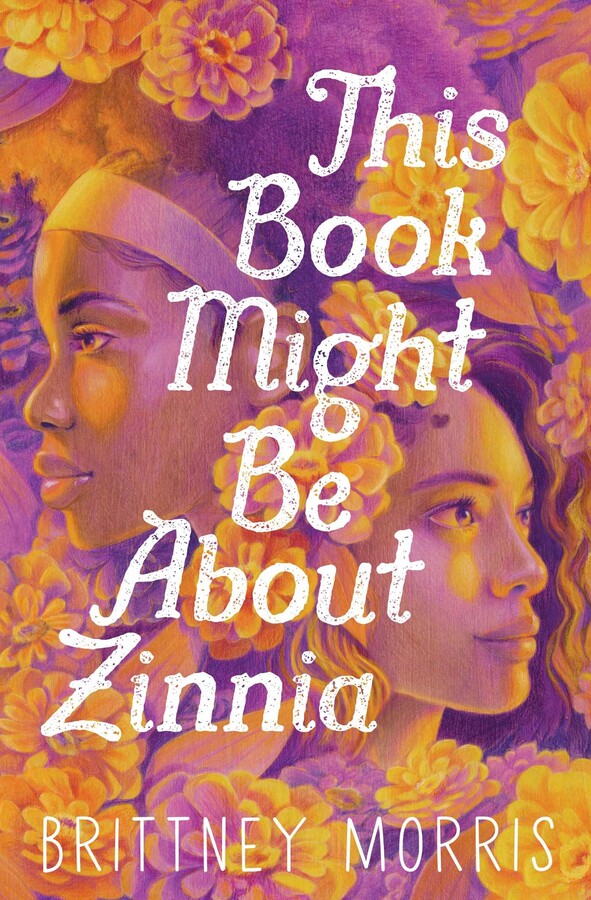
Clap When You Land meets Monday’s Not Coming in this “compelling, introspective” (Kirkus Reviews, starred review) novel told in two timelines as one teen searches for her biological mother and the other copes with giving up her baby from the acclaimed author of SLAY.
Two moments in time. Two very different girls. And one story that connects them both.
It’s the year 2024, and Zinnia Davis is on a mission to ace her personal essay. But when an admissions rep hints that her adoption story is “lacking heart,” she has to figure out a new spin. Frankly, Zinnia doesn’t know much about her birth parents; that is, until her favorite author releases a new novel—Little Heart—about a princess with a heart-shaped birthmark on her forehead and separated from her mother at birth…just like Zinnia. Could this be her birth mother?
Flashback to 2006, and teenager Tuesday Walker is barely making it through high school after experiencing a loss that had her on leave for months. To cope, Tuesday writes a series of entries in a journal, but when the journal is lost, it feels like reliving the trauma all over again. Tuesday’s search for the journal uncovers dangerous secrets about her past, her crush, and her own mother’s story.
If Tuesday isn’t careful in her search, Zinnia will have to reap the consequences in the present.
Reading Group Guide
Join our mailing list!
Simon ❤ Indies is full of valuable information for indie booksellers and buyers (both Children's and Adult), including:
In 2024, Zinnia learns her adoption story is too ordinary for her Harvard admission essay, so she sets out on a journey to find a more compelling story to write. When Zinnia reads a book about a lost princess with the same heart-shaped birthmark she has, the coincidences feel too real. Could the author be Zinnia’s birth mother?
In alternating chapters, readers follow Tuesday in 2006. Tuesday is mourning a loss that kept her out of high school for months. She writes in a journal during her work breaks at a cafe to process her trauma. When she loses her journal, her search leads to uncovering family secrets that could deeply impact Zinnia.
Discussion Questions
1. Zinnia is told her college essay lacks heart, yet Tuesday’s writing is full of emotion. Discuss each character’s writing process. How do they use writing as a tool and for what purpose?
2. Throughout the novel, songs overlap between the time periods. Choose a song from the book and analyze the different situations it comes up in between the timelines. How do the songs work to set the scene?
3. Whenever Zinnia talks about college, her friend Milo becomes visibly upset. Why does he feel this way? In what ways can you relate to either character?
4. Tuesday thinks to herself, “I’ve heard that everyone has a strict parent and a fun parent. Unfortunately for me, I got stuck with the former.” (Chapter four) What are your thoughts on this statement? Compare Zinnia’s and Tuesday’s relationships with their respective mothers.
5. Milo suggests Zinnia may have narcissistic traits. Why does he say this, and do you agree? Was Milo’s lashing out fair? Explain your answers.
6. After getting feedback from the Harvard College writing center that her essay is unoriginal, Zinnia struggles to identify something that makes her interesting because she “can’t even play the adversity card.” (Chapter five) What does she mean by this? Why do you think Zinnia believes colleges expect personal essays about adversity? As a class, discuss the purpose of a college essay and whether you think it should exist as part of the college admissions process.
7. Milo admits that he hasn’t thought about what he’ll do after graduation, because his mom is sick. Zinnia tries to be a good friend and distracts him. What are ways we can be supportive of friends going through grief and other challenges? How would you want to be supported?
8. Using examples from the book and your own experiences, what are some reasons people grieve besides the death of a loved one?
9. When Zinnia meets Ezra at Mountainview River Valley Park, he tells her, “‘I’m out here by choice.’” (Chapter seven) What clues from Tuesday’s timeline indicate Ezra would separate from his family? Why does Ezra choose to be in the park? What are your thoughts on his choice?
10. Zinnia makes references to her white parents being prepared to adopt a Black girl. But she thinks they may have been unprepared for her to pass for white in certain contexts. What does she mean? How did Tuesday lack support? If Tuesday’s mom had let her keep the baby, in what ways do you think she would have been ready to be a parent? How does someone prepare to be a parent?
11. Zinnia is told she has perfectionist tendencies. (Chapter thirteen) Pull examples from the book that support this statement. Research what this might mean for someone’s mental health. What are the pros and cons of being a perfectionist? Discuss with a partner.
12. At the beginning of the story, Zinnia presents as a confident teen with a strong sense of identity and a clear desire for what she wants. Identify moments in the book where the persona she has created for herself cracks. How does she grow over the course of the story?
13. Tuesday’s mom claimed to keep family secrets from her to protect her, but she repeatedly harms Tuesday. What do you think is the real reason her mother kept secrets?
14. Milo writes a goodbye letter to Zinnia and shares his fears about their friendship not lasting. (Chapter thirteen) Think about your fears postgraduation and the goodbyes you may need to say. In pairs, talk about how you’re feeling and how you might cope with postgraduation changes.
15. Ezra still wants Tuesday around, but not as an official girlfriend. Is it possible for exes to remain friends? Why do you think Tuesday and Ezra could not stay friends, or what reasons are there that prove they could? Discuss in small groups.
16. When Jodelle returns to the cafe, Tuesday lets her walk away without confronting her about taking her journal. What do you think would have happened if she’d chased after Jodelle? Do you think adult Tuesday will pursue confronting Jodelle about the creative theft? Explain your answer.
17. Justin eventually becomes Tuesday’s chosen family, but it takes time for Tuesday to trust him. Why does Tuesday keep her distance from Justin, and how does he gain her trust? Use examples from the book to support your answer.
18. Jodelle exploits Tuesday’s trauma to write a bestselling novel. Provide examples of other ways that stories can be exploited. What if Jodelle had not stolen Tuesday’s intellectual property but had still written a story about a Black girl who put her baby up for adoption. Is it acceptable for Jodelle as a white woman to tell that story? Explain your answer.
19. The book demonstrates the power of forgiveness. As a class, discuss the turning points and choices that kept the story moving. What were the moments in which an earlier decision to forgive would have completely changed the plot?
Extension Activities
1. Justin asks Tuesday what songs she’d include if she burned a CD for him. Create a playlist for the novel. Explain why you chose each song and where in the book each song would fit.
2. Milo explains to Zinnia that reading The Well helped him realize “‘every conversation we’ve had in the last few days has been about you and your essay, and your life, and your problems, and your mom.’” (Chapter nine) While Zinnia did not intend for this to be Milo’s takeaway from the book, it shows that each reader takes away something different from a story. Write a reflection essay about a book that made an impact on you, perhaps by shifting your thinking, helping you process an issue, or teaching you a lesson.
3. Tuesday reflects on giving Zinnia up for adoption, noting that “based on her skin color alone, she’d go fast.” (Chapter eight) What does she mean? Research interracial adoption, including sources directly from adoptees who are Black, Indigenous, or other people of color with white parents. As a class, share some of the facts and anecdotes you learned. Maybe you are an adoptee—you can choose to share your experiences if you’d like.
4. This book explores consequences—especially within families—and the lasting impact of certain choices. It also provides a chance to learn that our caregivers are people with identities and emotions outside of caring for us. Interview a parent or caregiver about their life when they were your age, especially any choices they had to make. Did any of their choices impact your present-day life? What surprised you? What could you relate to or not understand? Share your reflections with a classmate and listen to their discoveries.
5. Zinnia is fortunate to have a family who can support her financially, but Milo and Tuesday are on their own after their parents pass away. In pairs, work together to research and create a budget as though you are roommates in an apartment. What jobs could you apply for with a high school diploma? What would college cost if you wanted to attend? What about rent, groceries, utilities, transportation, and more. Reflect on what you’ve learned. Perhaps you are someone who relates to Milo and Tuesday, or maybe you recognize a level of privilege, like Zinnia. What avenues exist to support low-income individuals?
Guide written by Cynthia Medrano, Librarian at the Highland Park Public Library.
This guide has been provided by Simon & Schuster for classroom, library, and reading group use. It may be reproduced in its entirety or excerpted for these purposes. For more Simon & Schuster guides and classroom materials, please visit simonandschuster.net/m/prek12-teachers-librarians/teaching-resources.
Brittney Morris is the author of SLAY, The Cost of Knowing, The Jump, and This Book Might Be About Zinnia and has written video game narrative for Insomniac Games’s Marvel’sSpider-Man 2 for PlayStation 5, Unknown Worlds’s Subnautica: Below Zero, and Soma Games’s The Lost Legends of Redwall. She is the founder and former president of the Boston University Creative Writing Club. She holds a BA in economics. You can find her online at AuthorBrittneyMorris.com and on X or Instagram @BrittneyMMorris.
Why We Love It
“Brittney Morris really shows off her writing chops in this book. This book is evocative, melancholic, and introspective—an unforgettable read from start to finish.”
—Deeba Z., Senior Editor, on This Book Might Be About Zinnia
Product Details
Publisher: Simon & Schuster Books for Young Readers (July 1, 2025)