Prologue
prologue Hidden No More
Graduate student
Margaret Walsh Rossiter made a habit of attending Friday afternoon beer parties with Yale University’s eminent historians of science. One day, out of curiosity, she asked the great men present, “Were there any women scientists?” This was 1969, and none had been mentioned in her courses or reading material.
“No,” came the answer. “There have never been any.”
“Not even Madame Curie,” someone asked, “who won two Nobel Prizes?”
“No. Never. None,” was the response. Marie Curie was a drudge who stirred pitchblende for her husband’s experiments. According to some of the world’s leading male academics, we women scientists did not exist.
A few years later, Rossiter, still curious, found herself thumbing through a biographical encyclopedia titled
American Men of Science. Despite the name, she discovered that it included entries on more than a hundred women. Rossiter tried to get an academic job to study more women scientists, but no university was interested. And she couldn’t get a grant to do her research independently, because no one else knew enough about women scientists to judge her proposal.
Rossiter didn’t have much money, but, liberating her parents’ second car, a highly unfashionable Dodge sedan, she spent months driving at top speed, crisscrossing the Northeast from the archives of one women’s college to another. Then she expanded her search to the rest of the country, trawling through boxes of records in library basements and attic filing cabinets, finding evidence of women scientists everywhere. A representative denounced her on the floor of Congress, arguing that writing about women scientists was a waste of taxpayers’ money. The resulting publicity helped even more people learn about her mission, and soon Rossiter was planning a book—although one Harvard professor joked, “That’ll be a really short book, won’t it?” A dozen publishers brushed off her proposal because everyone “knew” women scientists didn’t exist.
Nevertheless, in 1982, the first book of Rossiter’s three-volume history,
Women Scientists in America, began documenting the existence of our hitherto invisible world. Suddenly, reading those pages, we women in science knew we were not alone. We were the intellectual descendants of a long line of women who’d done significant work. As for Rossiter, she expanded the world of science, founded a new area of study, won a MacArthur Foundation “Genius Grant,” and became a chaired professor at Cornell University.
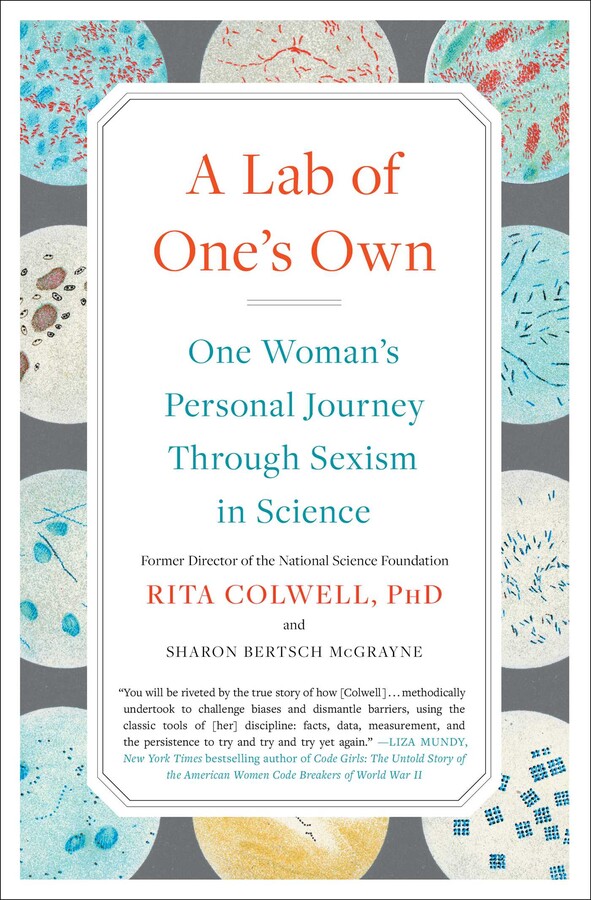
As the story of my life as a scientist, this book tells the human side of this history. It tells what it’s like for a woman to go into a field so dominated by men that women were rendered invisible. It’s about an enterprise in which, even today, many men and women believe the ability to do high-level science is coded by the Y chromosome; in which men are seen as more competent than identically qualified women; in which the more decorated a male scientist is, the fewer women he trains; in which universities hire their junior faculty members from these elite men’s labs.
But let me say from the outset: this book is not a litany of complaints. I have had my own laboratory for almost sixty years, and for every man who blocked my way in science, there were six who helped me. Nevertheless, the scientific enterprise remains a deeply conservative institution filled with powerful men—and some women—who reject outsiders, whether women of any stripe, African American men, Latinos, other people of color, immigrants, LGBTQ people, people with disabilities, or anyone else who doesn’t fit the stereotype of the white male genius.
Science is an institution struggling to shed its past. And every time I hear someone say, with the best of intentions, that we have to get more women into science, I get irritated. We have
never had to interest women in science. Everywhere I’ve looked, there have been hidden figures, working in the shadows of their husbands’ labs or in the labs of male allies, in medical museums and libraries, in government agencies, or in low-level teaching positions across the country. There have
always been highly capable women wanting to be scientists.
But there has also always been a small set of powerful men who wouldn’t let women in. Decades later, we still have men who can’t believe that they played any role in stopping talented women from following their passion.
So here in this book, I offer some recommendations for what remains to be done to open the doors of opportunity to women scientists—and how women can open those doors for themselves. Because when women speak up despite the forces acting against us, we will succeed. And succeed we must, because the security, economic strength, and social stability—the destiny of every country in the world—depends on us all.