About The Book

“Kadohata’s slapshot is the heart-swelling narrative of a father and son…Truly powerful.” —Jason Reynolds
“A deeply poignant story about a boy sorting out his priorities.” —Publishers Weekly (starred review)
“A vivid, memorable portrayal of a boy within his family, his sport, and his gradually broadening world.” —Booklist (starred review)


From Newbery Medalist Cynthia Kadohata comes a brilliantly-realized novel about a hockey player who must discover who he is without the sport that defines him.

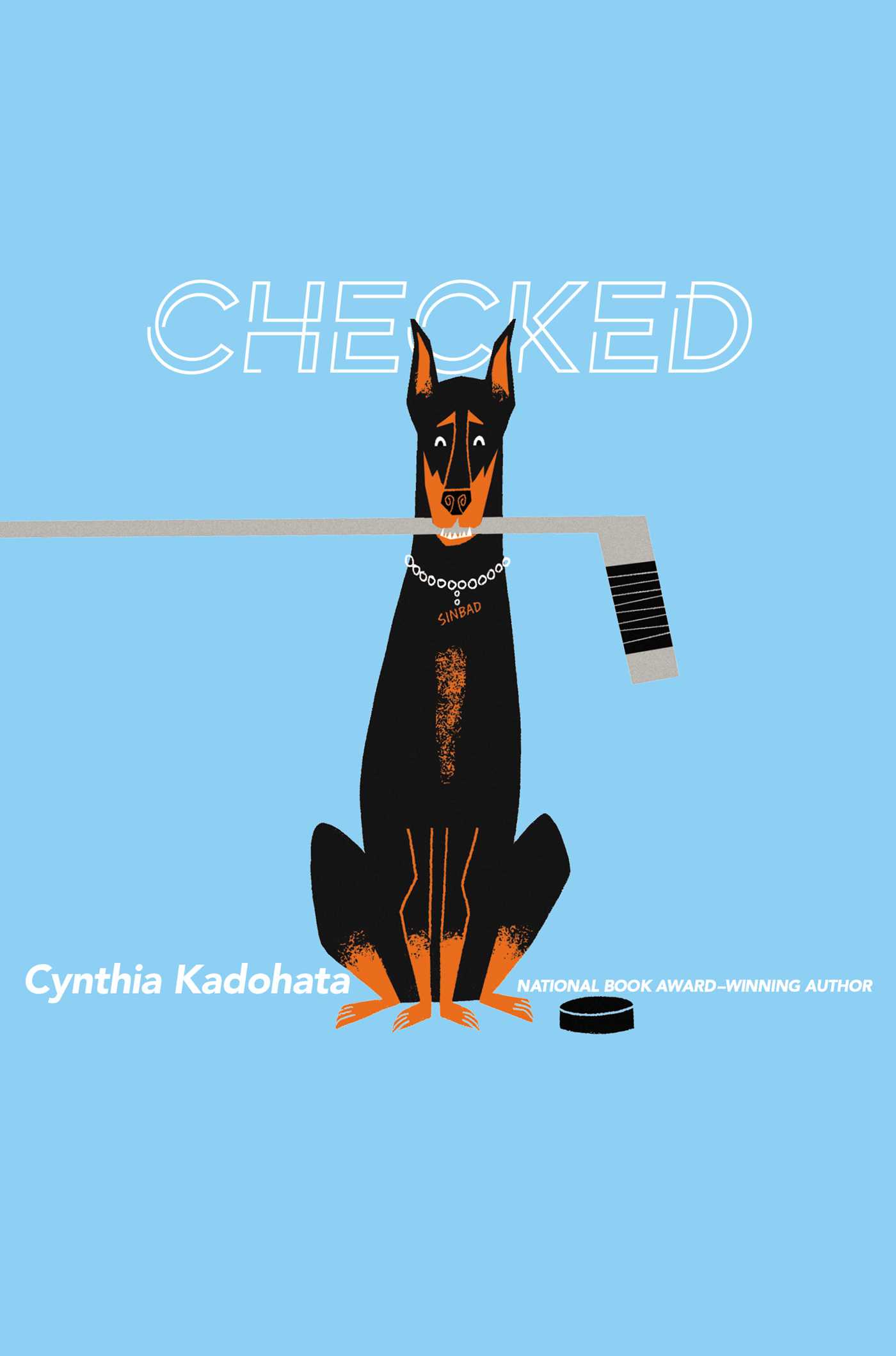
Hockey is Conor’s life. His whole life. He’ll say it himself, he’s a hockey beast. It’s his dad’s whole life too—and Conor is sure that’s why his stepmom, Jenny, left. There are very few things Conor and his dad love more than the game, and one of those things is their Doberman, Sinbad. When Sinbad is diagnosed with cancer, Conor chooses to put his hockey lessons and practices on hold so they can pay for Sinbad’s chemotherapy.

But without hockey to distract him, Conor begins to notice more. Like his dad’s crying bouts, and his friend’s difficult family life. And then Conor notices one more thing: Without hockey, the one thing that makes him feel special, is he really special at all?

Excerpt

Checked

CHAPTER 1


I GAZE AT the tall stairs and pause, gathering my strength, leaning my head back to stretch my neck. The sky’s a little gray ’cause there’s a fire near our house—we live in Canyon Country, near the Angeles National Forest, and the forest is on fire. But this morning the smoke still looked far away, so Dad and I decided to drive to the park and do our usual sixty-minute Saturday workout, just ’cause we’re workout animals. If you make an excuse not to work out one time, that means you can make an excuse the next time too. We’ve brought my Doberman, Sinbad, like we always do. There’re 280 concrete stairs leading from one level of the park to another. Now Sinbad looks at me eagerly, wagging his stub of a tail, but he never climbs up and down the stairs with us. He just doesn’t see the point.

Dad starts running up the stairs, and I follow. “Come on, Sinbad!” I cry out, but even without looking, I know he won’t join in. Dad’s thirty-five and in amazing shape for an older guy. He’s already way ahead of me, so I pick it up. It’s eighty degrees, though it’s only seven in the morning, and I’m immediately sweating. June in Canyon Country can get pretty hot.

My mind is on how my next week is looking hockey-wise. Tomorrow, three and a half hours of stick time with Shu Zhang. Then dryland muscle work with Shu. Monday, power skating and coaches’ time with Aleksei Petrov. Tuesday, pre-tryout clinic with Dusan Nagy. Wednesday, off day. Thursday, lesson with Ivan Bogdanov. He’s a figure skater who competed for Bulgaria in the Olympics. I skate with him to help my agility. Friday, pre-tryout clinic with another club in case I don’t make my first-choice team in almost two weeks. Saturday, three and a half hours of stick time with Shu. Then dryland with Shu. Plus any scrimmage that I can latch onto during the week. Plus working out a few times with my dad. Oh, and sometimes I do stick time by myself, just to get on the ice.

Hockey is in my soul. I inherited my soul from Dad. He made it to the American Hockey League, which is the main development league for the National Hockey League, which is the premier hockey league in the world. He says that when he was twenty-three years old and briefly the best player on his team, the NHL was so close he could taste it. Then he made it up there—to the NHL!—but got sent back down in three weeks. All together he stayed in the AHL for four years, all in Des Moines, Iowa. That’s where I was born, a million miles from here.

We sprint up and down the steps for fifteen minutes, then trudge up and down for another fifteen. Afterward—soaking wet—I lie on the grass to rest by the steps. Sinbad sniffs at me.

“Enough relaxing!” Dad says, but I’ve only been lying there for maybe one minute!

“Seriously? I just laid down!” He looks at me with zero sympathy. That’s the way it is with hockey. Nobody has any sympathy for you, not one person.

We do push-ups—I can do thirty-three perfect ones and a few more half-baked ones. But I’m somehow getting my energy back. Then we rest for thirty seconds and do clap push-ups—I do ten. Usually I only do eight, so I’m suddenly thinking I’m pretty beast.

Squats, several exercises with a ten-pound medicine ball. Frog jumps, one-legged slaloms, scissors, double Dutch. Five hundred crunches. I’m an animal!

We finish with stretching. I’m a flexible kid, but for some reason I hate stretching. I just go through the motions.

Then Dad takes a break with his phone while I walk off with Sinbad. There’s hardly anyone in the park. Dad lets me go off by myself with Sinbad ’cause my dog’s really muscular and really protective. Dobermans stick to you like superglue. Otherwise I’m not allowed to be out alone. Dad’s a cop, so he’s seen a lot of bad stuff—he knows what can happen to a kid on his own, even in Canyon Country. Sinbad and Dad are my only family. I mean, I have an aunt and my grandparents, but I don’t have a mom or sisters and brothers and cousins. My mom died when I was two. I can’t remember her at all, but Dad says I was so close to her that for my first year nobody else could even hold me. Then my dad was married for eight years to another woman, but it didn’t work out for a bunch of reasons that I’ll get into at some point. One reason was hockey—when a kid plays travel hockey, it takes up a lot of space in your life. Some people don’t like that.

When I started playing, it was like Dad was living through me, but not in a bad way. It was more like him and me got so bonded he was out there with me on the ice during games. Even though I play defense, I got the winning goal in one playoff game, and later in the car he was tearing up about it. Getting that goal was pretty much the best moment of my life. Everybody was jumping all over me and pounding my helmet so that my brain was ringing and I was in a total other, like, awareness plane. When I told Dad about that later, his eyes got a faraway look, and he said, “Yeahhhhhhhh . . .”

Reading Group Guide

A Curriculum Guide to

Checked

by Cynthia Kadohata

About the Book

Three things matter most to Conor: his dad, his dog, and hockey. Conor and his dad, once a pro player, spend long hours at the rink and on the road for tournaments, aiming for Conor to go pro someday. When Conor’s not skating, he hangs out with his beloved dog, Sinbad. But then Sinbad gets cancer, and treatment costs thousands of dollars. Conor must confront a choice between his extra hockey lessons and helping Sinbad live a few more years at most. The trouble is, it’s only when Conor’s out on the ice that he can leave his troubles behind and get in the zone—with the best team he’s ever been on!

Discussion Questions

1. Discuss the book’s title. What are different meanings for the word checked? Why do you think the author chose it? How does it reflect important elements of the novel?

2. What kind of a person is Conor? What are some things he’s concerned with, and what gives him happiness? Discuss how he changes in the course of the book, and what brings about those changes.

3. What is Conor’s father like? How does he treat Conor? What is their everyday life like together? What do they have in common that’s important to both of them?

4. Talk about why Conor’s father cries, and whether you think that will change in the future. Judging from Mr. MacRae’s life, why is being a police officer difficult? When it comes to his father, why does Conor say, “‘I gotta take care of him’”?

5. Describe Sinbad, his personality, and his role in Conor’s life. Why do you think they are so close? How does Sinbad’s illness affect Conor? Near the end of the book, Conor says he wants to be “‘right here, in the moment, the way Sinbad always is.’” What does he mean by that?

6. Talk about the importance of hockey in Conor’s life. Why does it matter so much to him? What are some of the benefits of playing hockey? What are some of the drawbacks? Do you think it’s a good choice for him to pursue hockey so intensely?

7. Describe the house and the neighborhood where Conor lives. On the last page, Conor says that the hills of Canyon Country are “‘where I’ll always belong.’” Why does this location matter so much to him?

8. Point to some of the ways in which Conor helps Mr. Reynolds. What do these interactions show about Conor’s character and his upbringing? Does Mr. Reynolds help Conor at all?

9. More than once, Conor describes his Aunt Mo as “great and embarrassing, but mostly great.” What’s her relationship like with Conor and his father? What does Conor like about her? How does she embarrass him?

10. Conor says of Coach Dusan, “‘He’s literally the only person I know who I never see standing around looking at his phone.’” What does that tell you about the coach? Why does Conor want to be on Coach Dusan’s team? How does he treat his players?

11. Why do you think the author closed the book with the chapter about Thanksgiving and Conor meeting his grandparents? Why did he decide at first not to see them? Why did he change his mind? Describe their meeting and his reaction to his grandparents.

12. Conor makes observations about the different kinds of parents who attend their kids’ hockey practices and games. Find examples from the novel and talk about them. What are some of the characteristics parents display that are good for the athletes? What actions present problems for the child and the coach?

13. Describe Jae-won and his family. Discuss Conor’s friendship with him and his relationship with Jae-won’s family. What activities and feelings do the boys share? How are they different?

14. Describe Lucas’s personality. In what ways is his family life different from Conor’s? Why does Conor feel grateful for Lucas, and what does he learn from him?

15. This is a novel about hard choices. Identify some of the hard choices that Conor, his father, and others make in the book, and what Conor has to say about those choices. How does dealing with hard choices change some of the characters and their lives?

16. Conor’s father says, “‘Having a life you’re passionate about is the only thing that’s worth a can of beans in this world.’” What does he mean? What prompts him to say it? Who in the book has such a passion, and how has it affected his or her life?

17. Conor thinks about the importance of moving on from mistakes or disappointments, saying, “‘It’s just like a tree getting burned down. Then you regenerate.’” What does he mean by that? What problems is he facing? What are different ways he and Sinbad regenerate in the novel?

Extension Activities

What Makes a Good Coach

What makes a good coach? What characteristics are drawbacks? Have students write an essay about this topic, drawing on the novel and their own experiences. If they haven’t had a coach, students should talk to others who have or glean information from sports stories in the media. The essay should also touch on the similarities and differences between a good coach and a good schoolteacher.

The Price of Success

When he’s on the airplane, Conor reflects that NHL players often leave their homes and families to travel. Have each student choose a highly successful professional athlete in any sport, and research the level of work and commitment—even sacrifice—that his or her success has required. In their research, students should find the extent to which the sport dominated athletes’ lives as children and teens, and the cost as a pro athlete in terms of time and other sacrifices.

“Having a Life You’re Passionate About”

Conor’s dad emphasizes the importance of having a passion. Have students interview someone who has a passion in life in any area: sports, arts, animals, nature, reading, collecting, and so on. Small groups of students should first brainstorm a list of interview questions. The interview should be recorded, after which the student should summarize it and report back to the small group. Discuss the results as a class, and determine whether students agree with Conor’s dad on the importance of having a passion.

Amazing Dogs

Conor feels like Sinbad understands him and has strong intuition. Have students work in pairs to research one special aspect of dogs’ abilities. For example, they could focus on dogs that detect illnesses or on a type of working dog such as service dogs or military and police dogs. Using print and digital resources, the students should put together a multimedia presentation to share with the class.

Dear Son

Conor’s father is not a big talker, but he feels things deeply. Have students write a letter from Mr. MacRae to Conor at the end of the book, after the hockey tournament. It should express Mr. MacRae’s thoughts and feelings about Conor, Sinbad, his job situation, and any other topic of importance. Make this a writing journal exercise that students can keep private.

Concussions and Contusions

Sports injuries among young athletes, such as Conor’s concussion, have received a lot of attention in recent years. Have small groups of students choose different popular youth sports to research, focusing on statistics about injuries and rules to prevent injuries. They should report their findings to the class, and engage in a class discussion about youth sport injuries and whether more should be done to prevent them.

Guide written by Kathleen Odean, a former school librarian and Chair of the 2002 Newbery Award Committee. She gives professional development workshops on books for young people and is the author of Great Books for Girls and Great Books about Things Kids Love.

This guide has been provided by Simon & Schuster for classroom, library, and reading group use. It may be reproduced in its entirety or excerpted for these purposes.

About The Author

Photo Credit:

Cynthia Kadohata won the National Book Award for The Thing About Luck and the Newbery Medal for Kira-Kira. She’s also the author of many more critically acclaimed novels, including Checked, A Million Shades of Gray, A Place to Belong, Weedflower, Cracker!, and Outside Beauty. In addition to rescuing Dobermans, she’s also managed her son’s hockey team. She lives in California. Visit her online at CynthiaKadohata.com.

About The Illustrator

Product Details

  • Publisher: Atheneum Books for Young Readers (February 12, 2019)
  • Length: 432 pages
  • ISBN13: 9781481446624
  • Grades: 5 - 9
  • Ages: 10 - 14
  • Lexile ® 760L The Lexile reading levels have been certified by the Lexile developer, MetaMetrics®

Browse Related Books

Awards and Honors

  • CCBC Choices (Cooperative Children's Book Council)
  • Massachusetts Children's Book Award
  • Bank Street Best Children's Book of the Year Selection Title
  • Beehive Award Nominee
  • Kansas NEA Reading Circle List Top Pick

Resources and Downloads

High Resolution Images

BACK TO TOP