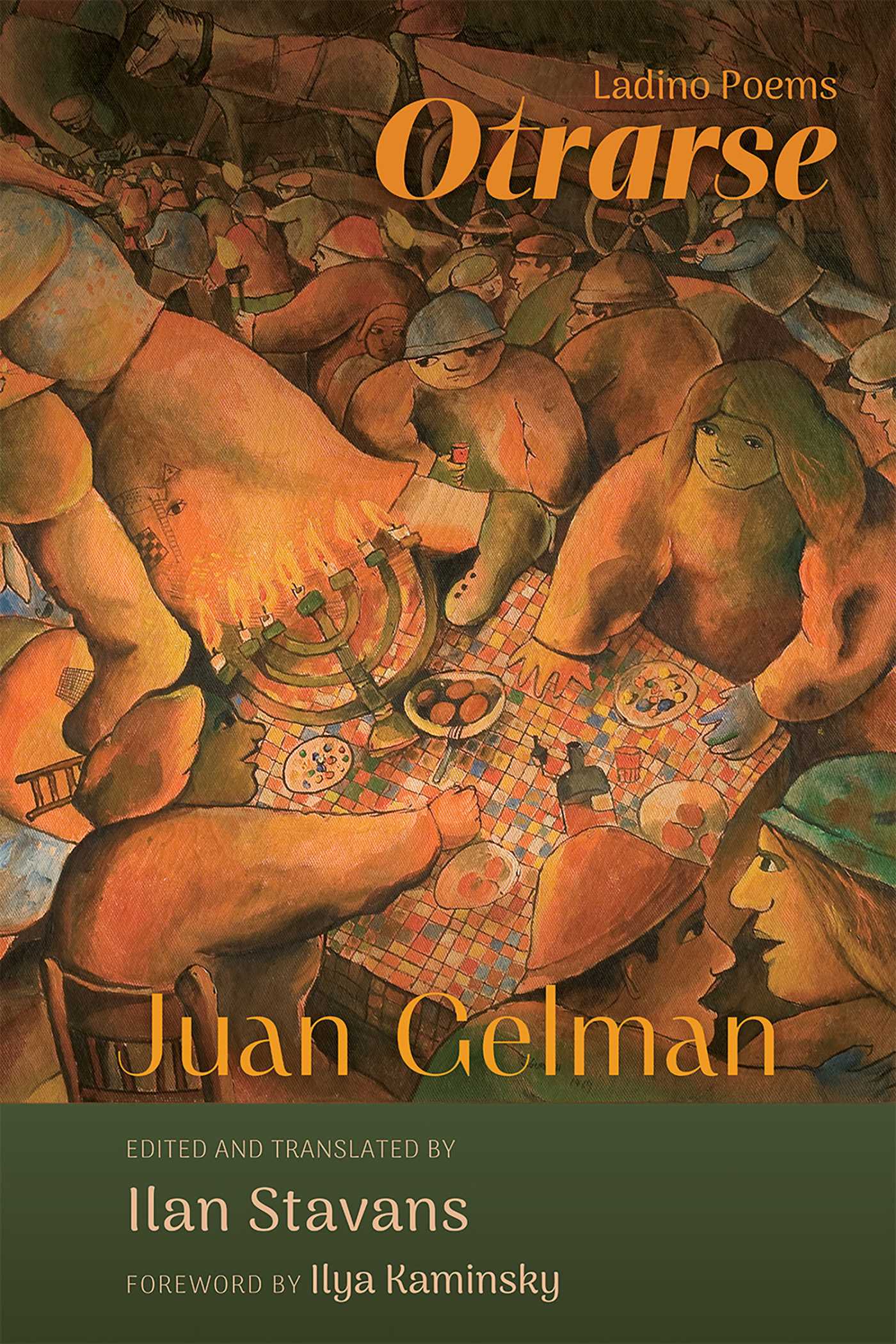
“Ilan Stavans’s Gelman is extraordinary. . . . We are in the presence of something marvelous: one of our best critical minds here introduces one of the twentieth century’s most fascinating poets, whose own journey was a conversation with poetics across the boundaries of time and space. . . . Stavans gently but with much nuance transforms our North American perspective on the Jewish presence in Spanish-language literature.”—Ilya Kaminsky, author of Deaf Republic
“I have long considered Juan Gelman as one of the greatest poets in the Spanish language of our time, and this anthology—with many verses I had never read before—confirms that certainty. In Otrarse: Ladino Poems, he sweetens the multitude of his own exiles by finding in a past that others have already partly written the road of return that can lovingly console us for all that we have lost and continue to seek, over and over, to regain.”—Ariel Dorfman, author of Death and the Maiden and The Suicide Museum
“I have long considered Juan Gelman as one of the greatest poets in the Spanish language of our time, and this anthology—with many verses I had never read before—confirms that certainty. In Otrarse: Ladino Poems, he sweetens the multitude of his own exiles by finding in a past that others have already partly written the road of return that can lovingly console us for all that we have lost and continue to seek, over and over, to regain.”—Ariel Dorfman, author of Death and the Maiden and The Suicide Museum
“Ilan Stavans has produced a major work of translation and commentary, bringing to the English language the incomparable poetry of Juan Gelman, whose life of exile and loss gave him the intimate knowledge to write about Sephardic memory as no other modern poet has done.”—Ruth Behar, author of Across So Many Seas
“Juan Gelman’s Ladino poems, made accessible here in Ilan Stavans’s apt translation, represent a fresh voice in literary modernism. I was especially struck by Gelman’s renderings of poems by some of the great Hebrew poets of medieval Spain. Even though he himself was working from translations, he managed to convey much of the arresting poetic force of the originals.”—Robert Alter, award-winning translator of The Hebrew Bible
“With Otrarse, Ilan Stavans grows the pile of books containing Juan Gelman’s work available to the reader of English. This bilingual anthology, infused with multiple languages, not only honors Gelman, but it also shares how the translator-scholar embraces and transforms the possibilities of language.”—Regina Galasso, author of Translating New York: The City’s Languages in Iberian Literatures
“Stavans does not produce poetry in English to be heard through a loudspeaker. On the contrary, the volume invites us to share in the subtlety of Ladino as it echoes through carefully crafted English. One cannot but feel the invitation to think of translation here as something other than an archaeological reconstruction. The overall effect is that through translation, Ladino becomes audible, gets a present and a future.”—Alicia Borinsky, author of One-Way Tickets: Writers and the Culture of Exile
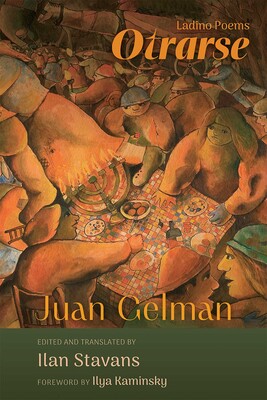
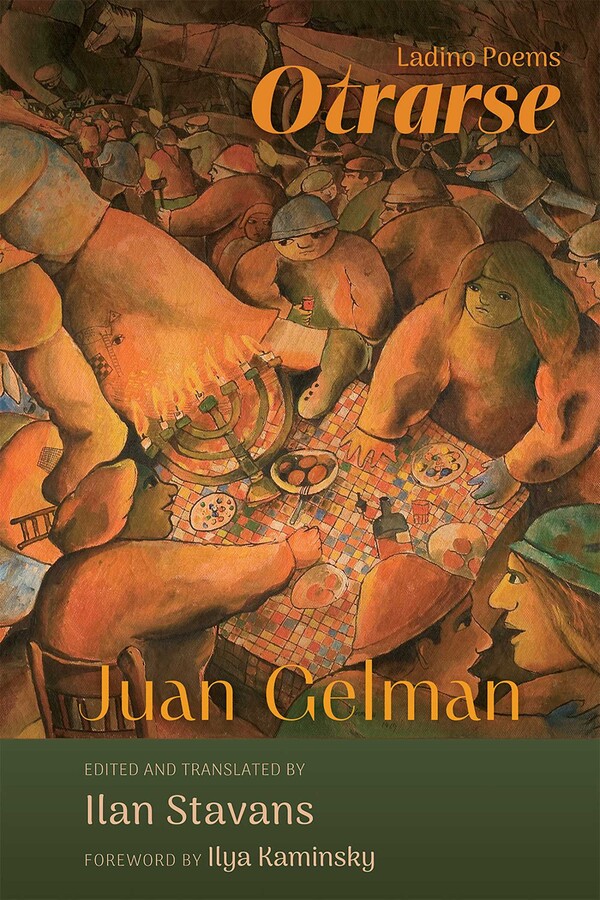
“In Otrarse: Ladino Poems, Juan Gelman reimagines medieval Jewish Hispanic poets such as Yehuda Halevi, Salomon ibn Gabirol, Samuel Hanagid, and Abraham Abulafia with whom he identifies, and even invents new ones like Eliezer ben Jonon. He also makes Santa Teresa de Jesús, San Juan de la Cruz, and Fray Luis de León talk to us again. He does all this in order to become “the other’’ and to display his affinities with Jewish and crypto-Jewish poets victimized by the Spanish Inquisition. Gelman himself was persecuted by the Argentine military junta and lived many years in exile. The influence of Sephardic literature, Kabbalah, midrash, and the Talmud are all essential to Gelman’s quest. For his part, Ilan Stavans, the translator’s translator, joins this refashioning through what he calls “ventriloquism.” He even refutes Gelman’s claim that translation is an impossible task, for, if that were the case, this book would not exist. Reader, you have before yourself a manual of lyrical acrobatics.”—Angelina Muñiz-Huberman, winner of Mexico’s National Prize of Arts and Literature and a member of the Academia Mexicana de la Lengua